
No oil in the tank changes everything about the risk profile. Here's how the protection, temperature, loading, and cooling actually work in the field.
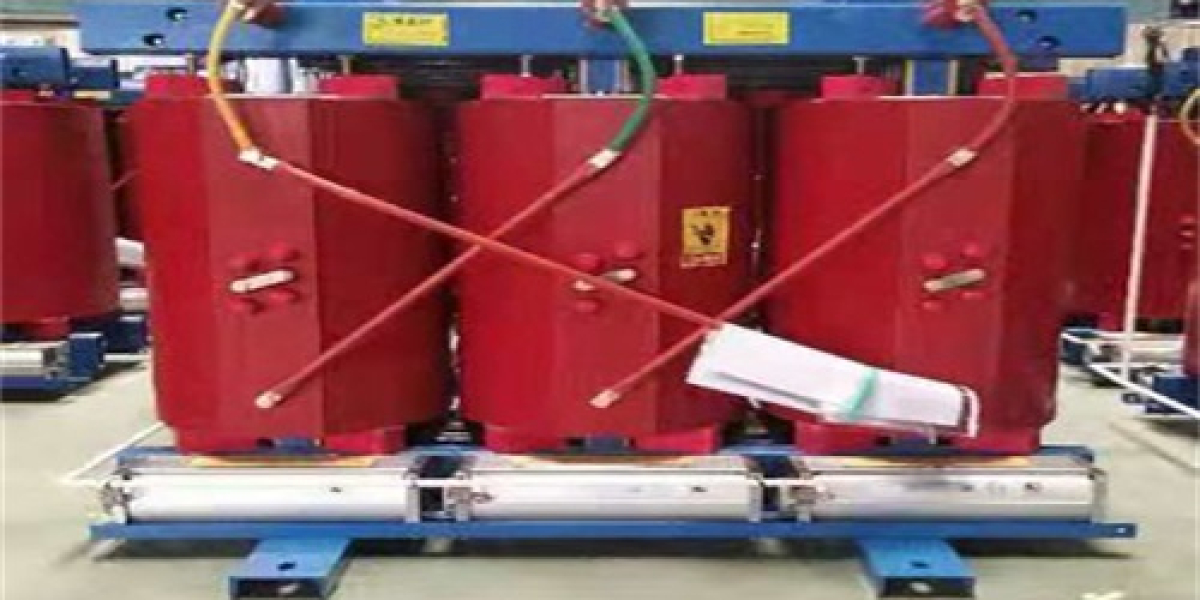
A dry-type transformer skips the oil, and that one design call is why you'll see them in hospitals, high-rises, tunnels, and anywhere a fire or a spill would be a headline. With no flammable coolant inside, there's no pool of oil to ignite, no containment basin to pour, and no toxic cleanup if a unit fails. Put that next to a liquid-filled transformer and most of the worst-case scenarios simply come off the table. You still have to respect the electricity, but you're not managing a flammable liquid at the same time.
The newer dry-type lines have also closed the gap on the two things oil units used to win on: losses and noise. Modern cast-resin and VPI units run with lower no-load and load losses, and they're noticeably quieter on the floor. If you want to see what that means in dollars over a study period, our transformer loss and total-cost-of-ownership calculator turns nameplate losses and your load profile into a real number instead of a sales claim.
If you're still getting your head around how a transformer steps voltage at all, our step-up vs step-down explainer lays out the turns-ratio math without the hand-waving. The rest of this piece assumes you already know which way your power needs to go.
Protection starts with the enclosure
Pick the housing to match the room, not the catalog page. Dry-type transformers let you choose the enclosure based on where the unit sits and what needs to stay out. The common pick is an IP23 enclosure (roughly a NEMA 2 or 3 in US terms). It blocks solid objects down to 12.5 mm, so a dropped wrench, a stray finger, or a rat, snake, bird, or cat can't reach the live parts. It also puts a real barrier between the energized windings and anyone walking past, which is the everyday "firewall" that matters more than the dramatic one.
If the unit is going outside, IP23 isn't enough on its own. Step up to a NEMA 3R enclosure, which is built for rain and sleet and sheds water even at a steep angle to vertical, the kind of driving rain that finds every seam. For the protection devices themselves, don't guess: our NEC 450.3(B) calculator sizes primary and secondary overcurrent protection straight from your voltages, kVA, and construction. And if you want the full enclosure-and-environment checklist, our isolation transformer guide walks through IP ratings, NEMA types, and exactly what each one keeps out.
Your transformer's life is decided by its windings
Safe operation and service life come down to one thing: keeping the winding insulation below the temperature it can survive. Push the winding temperature past the insulation's limit and the insulation breaks down. That single failure mode is the number-one reason a dry-type unit stops being usable long before its time. So temperature monitoring and alarm trips aren't optional extras you can skip to save money, they're the thing standing between you and a premature failure.
Use the embedded sensors (RTDs or PT100s) and set your alarm and trip points against the insulation class, not against a round number someone picked. When the alarm goes off, it's telling you the heat is winning, not that the gauge is being dramatic. Treat a temperature trip as a stop-and-look event, not a nuisance to reset.
How much load can it really carry?
It depends, and anyone who hands you a flat "120 percent" is guessing. Load capability tracks the operating temperature, how loaded the unit already was when you piled on more (the starting point matters), the insulation class, how well the unit sheds heat, and the thermal time constant. All of those move the answer, sometimes a lot.
If your job runs hot or swings hard, ask the manufacturer for the overload curve for your exact unit. Our manufacturer selection guide explains what to ask for and how to read a supplier's answer so you get a curve, not a slogan. Don't size from a rule of thumb you found online. Get the curve for the specific kVA and design you're buying, because that's the only one that applies to your box.
Two cooling modes, and they change what the unit can do
Dry-type transformers cool one of two ways: natural air (AN) or forced air (AF, with fans). In AN, the transformer runs at its rated capacity all day, every day, with no help. Switch the fans on (AF) and you pick up about 50 percent more output capacity. That extra headroom is built for intermittent peaks and emergency overloads, not for camping out at 150 percent forever.
Here's the catch that trips people up: when you're in AF overload, the load loss and impedance voltage climb fast, and the unit isn't meant to live there. Don't run it in continuous overload just because the fans are spinning. Fans fail, and a failed fan on an overloaded unit is how you find out the hard way. If you're sizing for harmonic-rich or redundant loads, our data-center selector shows how AN vs AF and the temperature-rise class shift the usable capacity, including the K-factor derating you'll eat on non-linear loads.
Questions people actually ask
Are dry-type transformers really safer than oil-filled ones?
Yes, in the ways that matter most. No flammable coolant means no fire propagation through the unit and no oil containment or spill remediation to plan around. That's why they're the default in occupied buildings and underground spaces. They're not magic, though. You still need the right enclosure, ventilation, and temperature protection, because an overloaded dry-type unit can still fail and smoke.
Can I put a dry-type transformer outdoors?
You can, but not in a standard indoor enclosure. You need a weatherproof housing, typically NEMA 3R, that keeps rain and sleet out at steep angles, and you should account for the higher ambient temperatures outdoor units see. They're primarily built as indoor equipment, so outdoor installs need the enclosure and siting called out explicitly on the order.
What temperature should I actually watch?
The winding hot-spot temperature, not the air around the unit. That's what the insulation class is rated against, and that's what your RTDs or PT100s are measuring. Set the alarm and trip off the insulation limit, respond to alarms instead of muting them, and you've covered the failure mode that ends most dry-type transformers early.
How much overload can it handle?
Enough to ride out a peak, not enough to live there. With fans (AF) you get roughly 50 percent more capacity for intermittent or emergency overloads. For anything sustained, get the manufacturer's overload curve for your specific unit and size from that. Continuous overload, even with fans running, shortens the life you just paid for.
Do I need the cooling fans?
Only when you need the headroom. In AN the unit carries its full rating continuously and silently, which is the mode you should design your normal load around. The fans buy you extra capacity for peaks and emergencies. The risk is treating AF as the baseline and forgetting that fans are a wear item that will eventually quit on you.