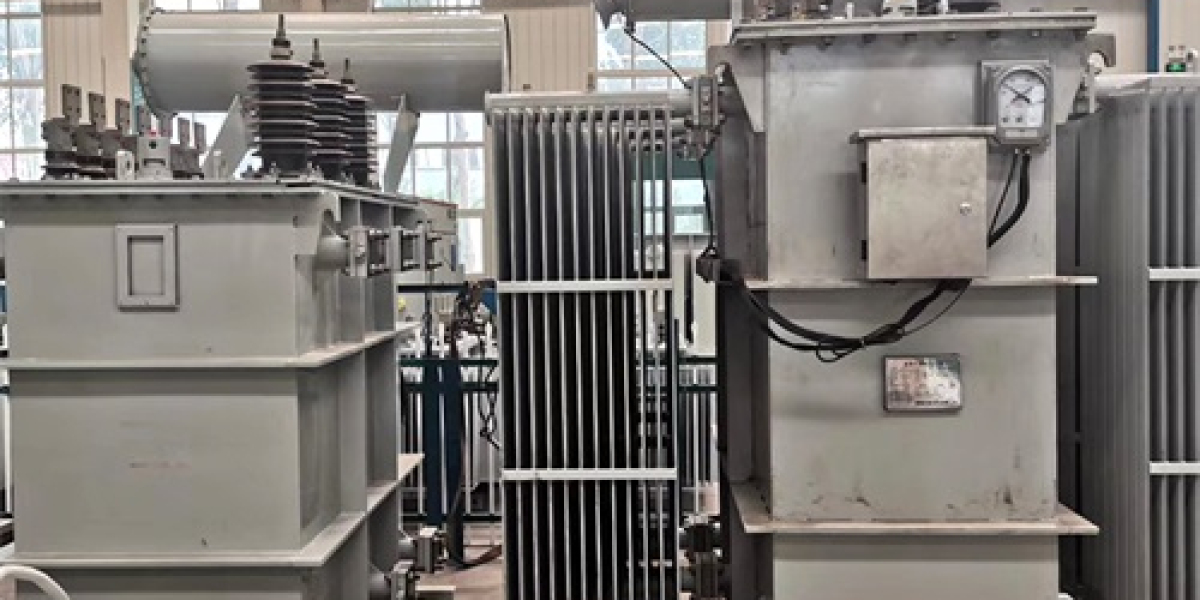

Picking the capacity for an oil-immersed transformer sounds simple until you live with the choice. Size it too big and you've bolted an oversized unit onto a small load. You pay for copper and steel you never use, and the transformer runs loaded for most of its life while your reactive power draw creeps up. Size it too small and it sits overloaded day after day, cooking the insulation until it fails early. Getting the number right is one of the cheapest energy-saving moves on a distribution network, and you can do it without fancy software.
Start at the load center
The old rule still holds: keep the units small and spread them out. Park the transformer as close to the load as the site allows, and keep the service radius under roughly 0.3 miles (0.5 km). Shorter secondary runs mean less voltage drop and fewer line losses before the power ever reaches the load.
Efficiency peaks when the load factor lands between about 0.5 and 0.6. The capacity that puts you in that band is what the textbooks call the economic capacity. Most distribution transformers are wired delta-wye (see our delta-wye transformer explainer), and that connection doesn't change the sizing math. If your load is steady and runs around the clock, size straight to that economic point and you're done.
Dedicated units for pumps and motors
When a transformer exists only to feed irrigation pumps or other motor loads, size it at about 1.2 times the motor's nameplate rating. Remember that a motor yanks 4 to 7 times its running current on start, and the transformer has to absorb that kick without the voltage collapsing. A good rule of thumb: your largest motor that starts on its own should stay under roughly 30 percent of the transformer capacity.
One detail that gets missed: keep pump-dedicated units off every other load. Do that and you can shut them down entirely in the off-season instead of paying standby losses all winter.
Mixed loads: lighting, processing, and the rest
For a transformer feeding lighting plus farm or light-industrial processing, don't size to the sum of the nameplates. Look at what actually runs at the same time. Take the highest simultaneous load you expect and add about 25 percent headroom, which works out to roughly 1.25 times that peak. If you want to double-check the demand factors against the NEC, our transformer NEC calculator walks through the numbers.
When the load swings with the seasons
Rural networks are a different animal: customers scattered, low load per mile, and demand that arrives in sharp seasonal bursts. A transformer you can re-tap off-load, an adjustable-capacity unit, pays for itself where the swing is large.
At a substation or a large plant, run a main-and-peaking arrangement: one unit sized for the peak, a second smaller one for the quiet periods. That lifts utilization and drops the no-load losses you'd otherwise eat around the clock. The same logic fits a rural feeder that only sees a brief annual peak. Run two units in parallel and switch capacity to follow the load, keeping losses as low as the duty cycle allows. Before you commit to a particular pairing, it's worth modeling the no-load and load losses over the year with our transformer loss and TCO calculator.
Choosing the unit, and where to read next
None of this matters if the transformer itself is built wrong, so when you're ready to buy, our guide to transformer manufacturers breaks down what to check on a spec sheet. If you're new to the basics, our step-up vs step-down guide clears up which one a distribution transformer actually is. For everything else, the TransNine transformer resources cover the deeper topics.
Right-sizing is half judgment, half arithmetic. Nail the load profile first, then let the 0.5 to 0.6 load factor and the 1.2x and 1.25x rules narrow it down.
FAQ
What happens if I oversize an oil-immersed transformer? You pay more up front for a unit you don't need, and because it runs lightly loaded, its no-load loss, the part you eat 24/7, becomes a bigger slice of your total losses. That's wasted energy every hour the transformer is energized.
What load factor gives the best efficiency? For most oil-immersed distribution transformers, efficiency tops out around a 0.5 to 0.6 load factor. Size so your typical load sits in that band and you'll be close to the economic capacity.
How big should a transformer be for a pump motor? Plan on about 1.2 times the motor nameplate, and keep your largest self-starting motor under roughly 30 percent of the transformer capacity so startup inrush doesn't drag the voltage down.
Can I hang other loads on a pump-dedicated transformer? Better not. Keeping it dedicated lets you shut the unit down in the off-season, which is the whole point of sizing it tightly in the first place.
What is a main-and-peaking transformer setup? It's two units sharing a load: one sized for peak demand and a smaller one for low-demand periods. You run the small one alone when the load is light and bring the big one online only when you need it, which cuts no-load losses during the quiet stretches.