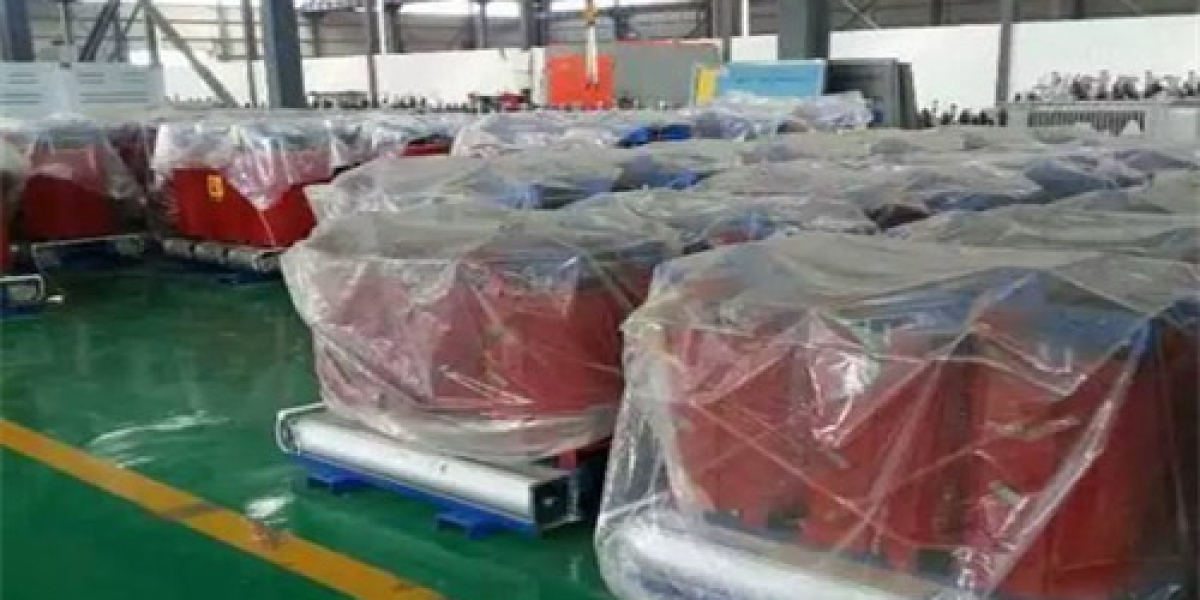

A dry-type transformer under load is never dead silent. A steady, low hum — usually at twice the line frequency — is completely normal. It's just the core doing its job. The moment that sound changes character, though, your ears are often the first fault detector you've got, sometimes beating a thermal scan by weeks. Below are the four noise signatures that, on an SCB14 cast-resin dry-type unit, mean something is genuinely wrong and needs to come out of service.
1. A rattly buzz while the load stays steady
If the unit sounds buzzier or rattlier than usual but your amp readings haven't moved, you're almost certainly dealing with a loose mechanical part. The usual suspects are the core-clamping bolts or the nuts that hold the laminations and frame together. Once they work loose, the silicon-steel laminations start vibrating against each other instead of sitting still, and that adds a harsh, tinny edge to the normal hum.
It's not an instant catastrophe, but don't shrug it off — the loosening only compounds, and a slapping core can eventually chew up the insulation. Tighten the hardware during the next scheduled outage and re-check the torque against the nameplate. One more thing worth noting: a loose, vibrating core can nudge your no-load losses upward, and across a row of units those stray watts add up. If you want to see what they actually cost over a study period, we put together a transformer loss and total-cost-of-ownership calculator you can run your numbers through.
2. Crackling or hissing — partial discharge
A "crackle" or soft hiss layered on top of the hum points to partial discharge: basically tiny internal arcing. On a cast-resin dry-type unit this usually shows up as corona or tracking on the bushings, or along a dirty, damp surface. If you can, look at the bushings on a dark, damp night — a faint blue glow or small flickering arc means the resin or porcelain is contaminated, or a terminal connection has gone poor. It can also be static discharge from an ungrounded metal part, or arcing at the tap-changer contacts.
Either way, take it seriously. Schedule testing, or pull the unit offline before it escalates into a flashover. And when you do take a unit down, make sure the upstream protection is sized right first — our NEC 450.3(B) sizing and overcurrent calculator walks through the breaker and fuse coordination you'll want in place before you de-energize.
3. A gurgling "boiling water" sound — plus heat
This is the one that should get your attention fast. If you hear what sounds like water boiling inside the enclosure and the case temperature is climbing, you've got a developing internal fault — most often a shorted winding, or a tap-changer contact running far too hot. Here's the catch with an SCB14: it's dry-type, so there's no oil level to watch the way you would on a liquid-filled unit. The rising enclosure temperature and that gurgling tone are your warning instead. If you want the primer on how those windings are actually arranged and why a short in one matters, our delta-wye transformer explainer covers the basics.
Shut it down and inspect. Do not keep it energized "just to finish the shift."
4. Loud, irregular banging or popping
A harsh, uneven bang or crack — not the steady hum — means something has broken down electrically: either the insulation inside the unit has failed, or you're getting surface tracking across a contaminated section. This is the point where you de-energize immediately. No listening tour, no "let's see if it settles." Pull it and get it inspected.
Q&A: the questions we actually get on site
So some noise is fine?
Yes. A constant low hum at 100 Hz (on 50 Hz systems) or 120 Hz (on 60 Hz systems) is the core magnetizing and is expected. What you're listening for is change — a new tone, a rattle, a crackle, or a gurgle that wasn't there last month. If you want the 30-second version of how a transformer actually moves voltage around, our step-up vs step-down piece covers the turns-ratio idea without the textbook.
The buzz got louder but the load looks normal. Am I okay to keep running it?
Short term, probably. A louder buzz with unchanged current almost always means loose core hardware, not an electrical fault yet. But it won't fix itself — schedule a torque check. If the buzz comes with heat or a smell, treat it as urgent.
What if I only hear a faint, occasional crackle?
Don't wait for it to get loud. Crackling is partial discharge, and partial discharge quietly chews through insulation over time. At minimum, clean and inspect the bushings. If it persists, test it or de-energize.
"Boiling" sound — is that even real? Dry-types don't have oil.
Right, an SCB14 has no oil, so you won't see a rising oil level like the old textbooks describe for liquid-filled units. The "boiling" is the audible signature of a winding short or an overheating tap contact, and the real cue is the enclosure heating up fast. Same action: shut it down.
Repair it or replace it?
It depends on what failed and how big the unit is. Small distribution dry-types are usually replaced rather than rebuilt; larger units may be worth opening up for internal repair. When you hit that fork, our guide on picking a transformer manufacturer and supplier lays out a repair-vs-replace framework and a scored shortlist method that takes the guesswork out of the decision.