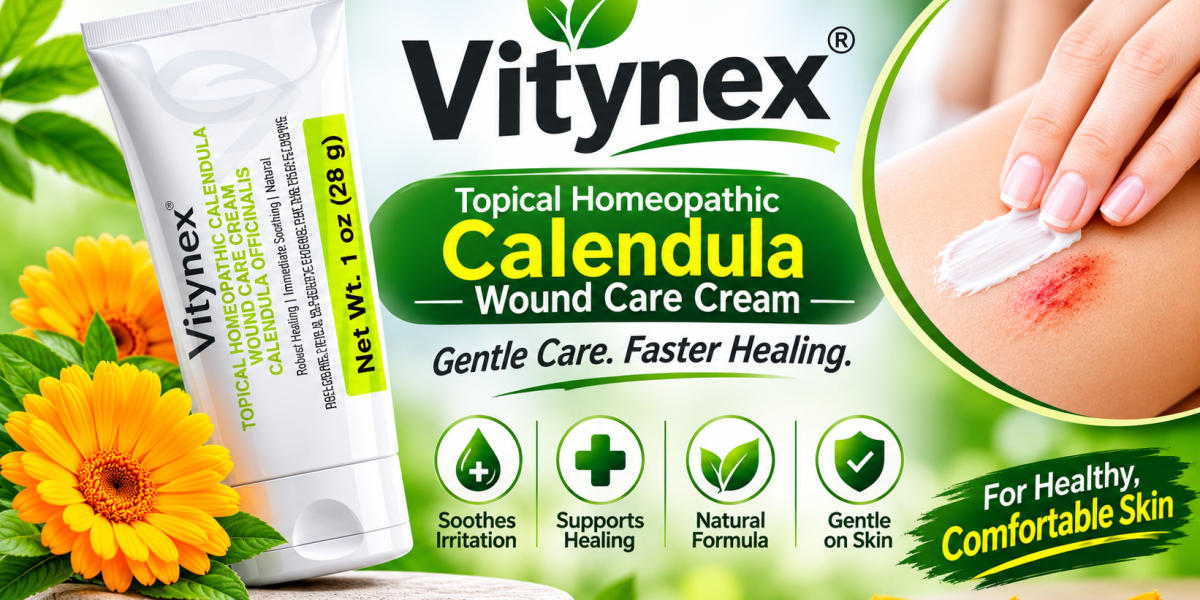

Vitynex is a homeopathic, calendula based cream positioned for skin and wound care, including after minor procedures such as a biopsy or Mohs surgery. It is applied to clean skin as part of a simple care routine. It is not a substitute for medical assessment when a wound is deep, infected, very large or slow to heal.If you have ever searched for a skin healing cream, you will know how crowded the shelves and search results are. Some products promise overnight miracles. Others are vague about what they are actually for. This guide takes a calmer approach. It explains what a skin healing cream is, how skin repairs itself, where a product like Vitynex fits into everyday care and what sensible habits matter far more than any single tube.
What Is a Skin Healing Cream?
A skin healing cream is a topical product designed to be applied to damaged skin, such as a minor cut, graze, dry cracked patch or a wound that has been closed after a procedure. Its job is usually to protect the area, help keep it comfortably moist and support the skin’s own repair process. The cream does not heal” the skin in the way a mechanic repairs a part. Your body does the repairing. A good cream simply creates better conditions for that to happen.That distinction matters. Healing is a biological sequence involving blood clotting, inflammation, new tissue growth and remodelling. A topical cream supports the environment around that sequence. This is why the best advice on any healing cream starts with the basics: keep the area clean, protect it from friction and contamination and watch for signs that something is wrong.
Meet Vitynex
Vitynex is a calendula based cream described as homeopathic. Calendula, often called pot marigold, is a plant that has a long history of traditional use for skin. On the product page, Vitynex is presented as a wound care cream suitable for everyday minor skin concerns and for postsurgical areas, including sites after a Mohs procedure or a biopsy, where the surgical team has advised on aftercare.It is worth being clear about what homeopathic” means here. Homeopathic products are made according to homeopathic principles and are positioned as traditional use products. They are not the same as prescription medicines and a cream like this should never replace advice from a doctor, nurse or pharmacist when a wound needs professional attention.
How Skin Heals The Four Stages
Understanding the stages of healing helps you judge what is normal and what is not. Wound healing is usually described in four overlapping phases.
1. Haemostasis (minutes). Immediately after injury, blood vessels tighten and platelets form a clot to stop bleeding.
2. Inflammation (the first few days). The area becomes pink or red, slightly warm and tender. White blood cells clear debris and bacteria. This is a normal and necessary phase, not necessarily a sign of infection.
3. Proliferation (days to weeks). New tissue forms. Fresh blood vessels grow, collagen is laid down and the wound edges begin to draw together.
4. Remodelling (weeks to months). The new tissue strengthens and reorganises. A scar, if one forms, gradually softens and fades, though it rarely reaches the original strength of uninjured skin.
A topical product mainly matters during the proliferation and remodelling phases, when the skin needs protection and a stable, comfortable environment.
Why Moisture Balance Matters
One of the most widely taught ideas in modern wound care is moist wound healing. Research dating back to the early 1960s showed that wounds kept appropriately moist tended to, meaning the surface skin cells migrate across the wound, more readily than wounds left to dry out and form a hard scab. Since then, moisture balance has become a cornerstone of wound management.A skin healing cream can contribute to that balance by forming a gentle protective layer. The goal is not to make the area wet or soggy. Too much moisture can soften surrounding skin and encourage problems. The goal is balance, not dry and cracked, not saturated.
Calendula Why It Appears in So Many Skin Products
Calendula officinalis has been used in traditional skin care for centuries. Its flowers are rich in plant compounds such as flavonoids and carotenoids, which is where the golden orange colour comes from. Some laboratory and small clinical studies have explored calendula preparations for skin, but the evidence base is mixed and varies by preparation, so it is better to describe calendula as traditionally used than as proven to speed healing.This honest framing is useful for readers. When a calendula based healing cream is described as supportive or traditionally used, you can set realistic expectations and focus on proper wound hygiene alongside it.
Fast Facts About Skin and Healing
Fact | What it means for you |
Skin is the body’s largest organ | A wound is more than cosmetic; it breaks your main barrier against germs |
The outer skin layer renews roughly every 4 to 6 weeks | Superficial damage often improves within that window, deeper damage takes longer |
Healing has four overlapping phases | Redness and tenderness early on are often normal |
Moist, protected wounds generally well | Overdrying a wound is not usually helpful |
Smoking, diabetes and poor circulation slow healing | Underlying health matters as much as the cream you use |
Age slows repair | Older adults often need extra protection and patience |
When a Skin Healing Cream May Be a Sensible Choice
People commonly look for a skin healing cream in the following situations.Minor cuts and scrapes. After cleaning and stopping any bleeding, a protective cream can help keep a superficial graze comfortable while new skin forms.Dry, cracked or irritated patches. Where the skin barrier is compromised but intact, a soothing, plant based cream may be used as part of a regular routine.Postprocedure sites. After a skin biopsy or Mohs surgery, surgical teams usually give specific aftercare instructions. A product may be used alongside those instructions, but you should always check with your surgeon or nurse first.Minor skin tears. Older or fragile skin can tear easily. Gentle, nonstinging care matters here and any significant tear should be seen by a nurse.
When a Cream Is Not Enough
A skin healing cream is for care, not for diagnosis or treatment of serious conditions. Seek prompt medical advice if you notice any of the following
Spreading redness, increasing heat, swelling or throbbing pain
Pus, a bad smell or cloudy discharge
A fever or feeling generally unwell
A wound that is deep, gaping or will not stop bleeding
A bite, a puncture or a wound contaminated with soil or rust
A wound that has not improved after two weeks, or has not closed in around four weeks
Any wound on a person with diabetes, poor circulation or a weakened immune system
Wounds that last longer than about four to six weeks are generally treated as chronic and need a clinician to look for underlying causes.
How to Use a Healing Cream Sensibly
Always follow the instructions on the pack and any advice from your clinician. In general, a sensible routine looks like this
Wash your hands thoroughly before touching the area.
Gently clean the skin with clean water or the solution your clinician recommends.
Pat the surrounding skin dry with a clean cloth or sterile gauze. Do not rub.
Apply a thin layer of cream to the area as directed.
Cover with a suitable dressing if advised and change it when it is wet, dirty or as instructed.
Wash your hands again afterwards.
Do a small patch test on intact skin first if you have sensitive skin or known plant allergies. Calendula belongs to the daisy family (Asteraceae). People with allergies to daisies, ragweed or chrysanthemums should be careful with calendula products.
Everyday Habits That Support Healing
Creams get a lot of attention, but the habits around them often make the bigger difference.
Nutrition. Protein, vitamin C, zinc and iron all play roles in tissue repair. A balanced diet supports the body’s repair work and if you suspect a deficiency, speak to a clinician rather than self prescribing supplements.Hydration. Staying well hydrated supports general skin health.Sleep and rest. Much tissue repair happens during rest.Not smoking. Smoking narrows blood vessels and reduces oxygen delivery to healing tissue.Protecting the area. Friction, pressure and repeated knocks interrupt repair. Use clothing and dressings that reduce rubbing.Sun protection. Newly healed skin and scars are more vulnerable to sun damage and discolouration. Cover the area or use sunscreen once the skin has closed.
What to Look for When Choosing a Skin Healing Cream
Not every product suits every person. Here is a practical checklist.
Clear purpose. Does the page say what it is for and what it is not for?
Transparent ingredients. You should be able to read the full ingredient list.
Realistic claims. Be wary of instant” or miracle” language.
Suitability for sensitive skin. Look for fragrancefree or gentle formulations if you react easily.
Guidance on use. Directions, cautions and when to seek help should be clear.
A brand that shares information openly. Visiting the brand’s main site, such as the Curapep website, is a useful way to see the range and how the company describes its products.
Common Mistakes People Make
Using a cream on a wound that needs stitches or medical care. If a cut is deep or gaping, see a clinician first.Picking scabs. This reopens the wound and raises the risk of scarring and infection.Overcleaning with harsh antiseptics. Strong antiseptics can irritate healthy tissue. Gentle cleaning is usually enough for minor wounds unless a clinician advises otherwise.Changing products constantly. Switching creams every few days makes it hard to tell what is helping or irritating.Ignoring warning signs. Early review of an infection is far better than late treatment.
Who Should Be Extra Careful?
Some groups should speak to a healthcare professional before using any new topical product on a wound: people with diabetes, those with poor circulation, people taking immunosuppressive medication, pregnant or breastfeeding women, young children and anyone with a known allergy to plants in the daisy family.
Final Thoughts
A skin healing cream is one small part of a bigger picture. The body does the healing. Good hygiene, protection, nutrition and timely medical advice do much of the work and a gentle, well described cream can be a helpful companion to those habits. If you are exploring options, read the full product information carefully, set realistic expectations and speak to a healthcare professional whenever you are in doubt.
Frequently Asked Questions (FAQs)
What is the best skin healing cream?
There is no single best cream for every situation. The right choice depends on the type of wound, your skin and any medical conditions. Choose a product with clear directions and transparent ingredients and ask a pharmacist or nurse if you are unsure.
What is Vitynex used for?
Vitynex is a homeopathic, calendula based cream positioned for skin and wound care, including minor wounds and areas after procedures such as a biopsy or Mohs surgery, where aftercare has been advised.
Is a skin healing cream the same as an antibiotic cream?
No. A skin healing cream is aimed at skin care and protection. An antibiotic is a medicine used to treat infection and should be used only as advised by a healthcare professional.
How long does it take for skin to heal?
Minor, superficial wounds often improve within one to two weeks. Deeper wounds take longer. If a wound shows no improvement after two weeks, get it checked.
Can I use a healing cream on an open wound?
Minor open wounds should be cleaned and protected, but deep, large, bleeding or dirty wounds need medical assessment first. Always follow clinician advice.
Is calendula safe for everyone?
Calendula is generally well tolerated, but people allergic to plants in the daisy family may react. Patch test first and stop use if irritation develops.
Can I use it after Mohs surgery or a biopsy?
Many people look for post procedure care options, but you should follow your surgical team’s aftercare instructions and check with them before using any product on the site.
Should I cover the wound after applying cream?
Often yes, with a suitable dressing, but follow the specific advice for your wound type.