
People ask this all the time, and the honest answer comes down to two things.
1. Loss tracks what you pull out of it.
We're talking about actual output here, not some calibration number on the nameplate. If the transformer isn't feeding anything, there isn't much loss worth mentioning. The more current you draw on the secondary, the more the unit spends on itself. It scales with load.
2. Then there's conversion efficiency.
Say your unit runs at 90% efficiency. That other 10% isn't doing any work — it's just gone, and that missing 10% is the transformer's loss. You'll never hit 100%, and anyone who sat through Physics 101 knows why: a share of that electrical energy always ends up as heat, a little vibration and hum, and so on. Energy conversion is never perfect.
Here's a concrete example. If you're pulling 120 W out to your equipment, your efficiency is probably sitting around 80%. That means the transformer itself is burning roughly 30 W or less — the unit is actually handling about 150 W on the input side, 120 W reaches your load, and the leftover 30 W turns into heat. Run a cheaper unit with lower efficiency and that self-loss climbs higher.
If you want real numbers instead of a guess, our transformer loss and TCO calculator will work it out from your load profile. And if you're still figuring out which kind of unit fits, the difference between step-up vs. step-down transformers — or how delta-wye transformer connections behave — matters more than people expect when it comes to where the losses land.
Q&A
Q: If my transformer isn't powering anything, is it losing zero power?
Not exactly zero, but close to what matters day to day. An energized oil transformer always carries a small no-load (core) loss just from keeping the core magnetized. The losses that really add up — the copper, or load, losses — only show up once you're drawing current. So the main point still holds: load-driven loss scales with how much you pull.
Q: What actually happens to that "lost" 30 W?
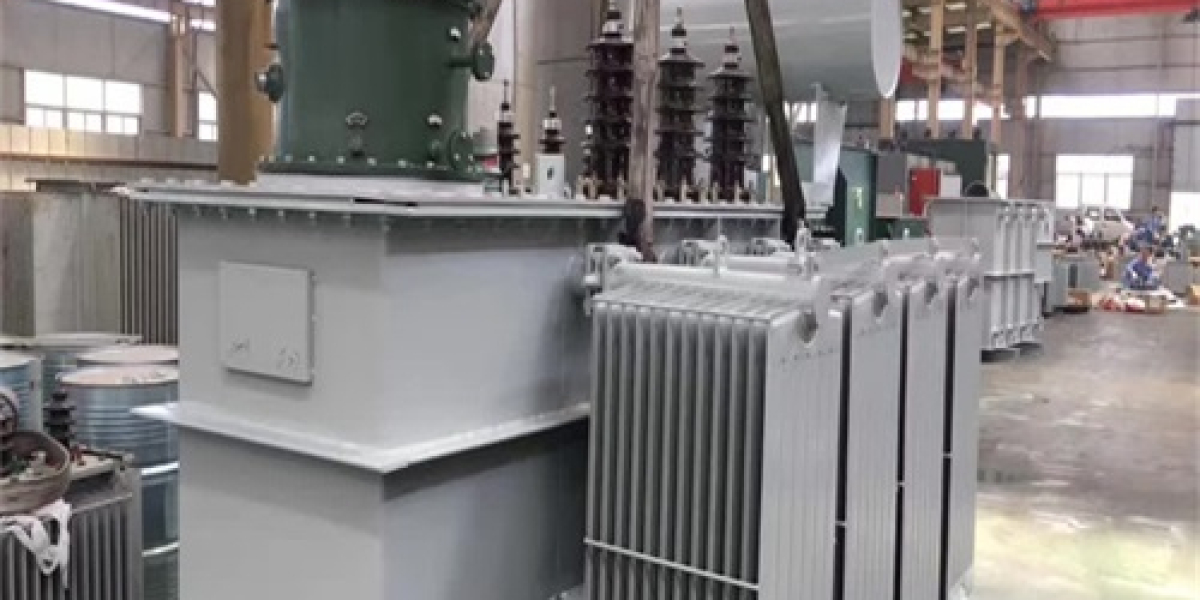
Almost all of it becomes heat, which is exactly why oil-immersed units circulate oil through a radiator to carry it off. A sliver leaks out as mechanical vibration and the audible hum you hear near a loaded transformer. None of it does useful work.
Q: How do I find my transformer's real efficiency?
Measure input against output, or use a tool built for it. Older or lower-grade units run hotter and waste more — which is why our isolation transformer buying guide and the rundown of top power transformer manufacturers are worth a read before you spec a unit. For everything around the topic, the transformer knowledge base pulls the related guides together.
Q: Does a more efficient transformer actually save money?
Yes, and not just on the power bill. Higher efficiency means less heat, a lighter cooling load, and less wasted energy across the unit's service life — which is exactly where a total-cost-of-ownership view earns its keep.