
Dry-type transformers insulate and cool with air instead of oil, so the core and coil are close to an oil-immersed build but the enclosure, insulation, and ventilation differ. They come in three builds — open, sealed, and cast-resin — and because air is a weaker insulator than oil, they are specified wherever fire safety rules: subways, public buildings, and plant interiors.
1. How a dry-type transformer is built
The magnetic core is essentially the same as in an oil-immersed unit — stacked, laminated silicon steel. In larger units the core carries air ducts so air can move through it for natural cooling.
The winding conductors are where dry-type construction earns its name. They use glass-fiber wrapped wire or other temperature-rated wrapped conductors, often in multiple layers, rather than the paper-wrapped conductors you would find in an oil unit.
Insulation class:
- Class B (130 °C rise) is the common baseline.
- Class H (180 °C) is specified where the application needs the extra thermal headroom.
Because the active part sits in open air instead of being submerged in oil, the coils are first vacuum-impregnated with a three-protective varnish (moisture-, fungus-, and salt-fog-resistant) and then given a waterproof top coat. The enclosure carries ventilation openings — usually on the top — so the heated air can leave.
One thing that catches people off guard is the winding connection. Most dry-type distribution units are built with a delta primary and wye secondary (Dy), and that choice drives how you size protection and grounding. Our delta-wye transformer guide explains how the connection behaves and why it matters before you spec the unit.
2. The three dry-type construction types
Dry-type transformers fall into three builds, and the real difference is how the active part meets the surrounding air.
Type | How it is built | Best for | Cooling |
|---|---|---|---|
Open (AN) | Active part open to the room air | Dry, clean indoor spaces | Natural convection; fans added above a size threshold |
Sealed | Inside isolated from outside air; can be gas-filled (e.g., SF6) with forced circulation | Harsh or contaminated sites (mine duty) | Forced circulation; approaches oil-unit performance when gas-filled |
Cast-resin | Windings encased in epoxy resin as the main insulation | Medium and small units where compactness matters | Air, often with fans |
Open type. The core and coils are open to the atmosphere, so it only makes sense in indoor air that stays dry and clean. Small units rely on natural convection (AN); once the unit gets large enough, you add cooling fans (AF) to push more air through.
Sealed type. The inside is sealed off from outside air, which is what you want in a contaminated or hazardous environment — mine transformers are the classic example. The trade-off is heat removal: a sealed box sheds heat poorly. Some sealed designs are filled with a gas that insulates and conducts better than air, sulfur hexafluoride (SF6) being the usual one, with forced circulation. Filled and circulated that way, the insulation and cooling can approach what an oil-immersed unit delivers.
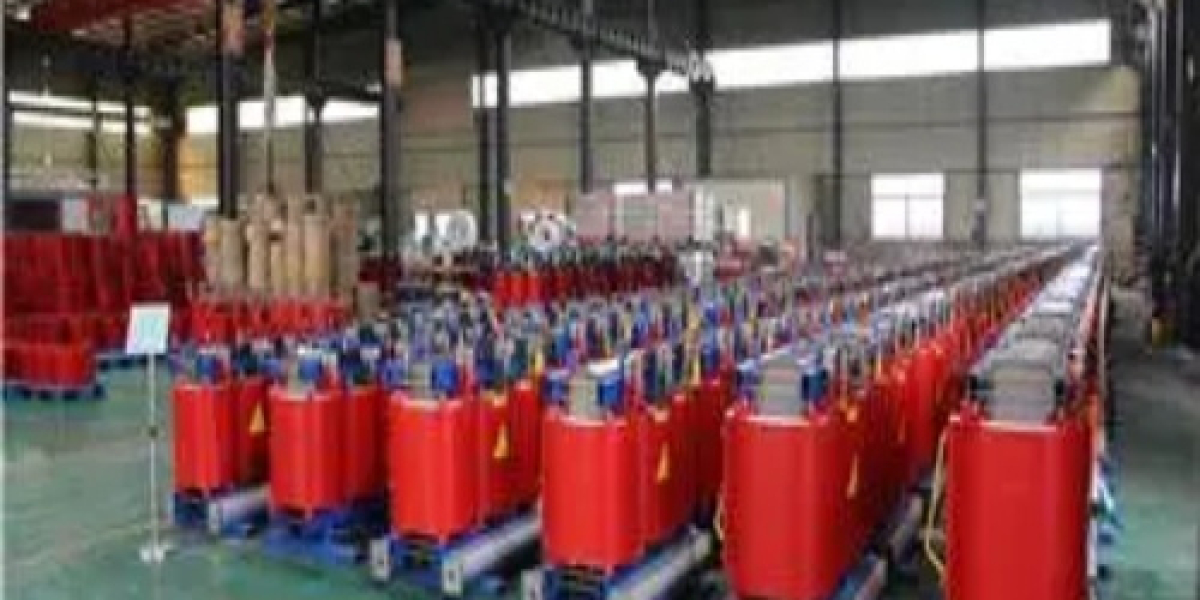
Cast-resin type. The windings are cast in epoxy resin, which acts as the main insulation. The result is compact and small-footprint, which is why cast-resin units dominate the medium and small capacity range.
A mistake worth calling out: cast-resin is not automatically the right build. In a clean, dry room an open unit costs less and is far easier to service, because you can actually get at the coils. The same selection logic is laid out in our isolation transformer types and buying guide. For the full range we build, see our products page.
3. Why dry-type instead of oil-immersed
Air simply does not insulate or move heat as well as transformer oil. To reach the same rating with air as the dielectric, a dry-type unit needs more active material — more copper, more iron — than the oil equivalent. That extra material is the reason dry-type is not the default for every application.
What it buys you is fire safety. With no flammable liquid, dry-type units go where a mineral-oil spill or fire would be unacceptable. The usual homes are subways and rail, public and commercial buildings, and the interiors of production workshops — anywhere the authority having jurisdiction (AHJ) or the owner's risk analysis rules out a liquid-filled unit. Representative installs are in our projects archive. For the standards and selection background behind these choices, the resources library collects the relevant guides.
4. Environment, overvoltage, and temperature limits
Two limits decide whether a dry-type unit will survive in a given spot.
Ambient humidity should stay within roughly 70%–85%.Push past that and you start stressing the insulation system.
Dry-type windings take impulse surges poorly. They should not be tied directly to an overhead transmission or distribution line without protection. If the application forces a line connection, you need surge arresters sized so the air-terminal overvoltage stays at or below the DC test voltage amplitude of the winding.
The hottest-spot temperature must never exceed what the manufacturer states. If you have no manufacturer data on hand, fall back to the applicable standard temperature table (the source references Table 15-1) rather than guessing.
5. In-service inspection checklist
For a unit already in service, walk these points on a set schedule:
- Voltage and current readings, including neutral current, sit within the normal range.
- Bushings and insulators show no damage, cracks, or discharge tracking.
- Cable and busbar connections show no overheating — discoloration or loose terminations.
- The temperature monitoring device is present, accurate, and working.
- The transformer sound is normal — no unusual hum, buzz, or arcing noise.
- Forced-cooling fans run when called for and draw the expected current.
- The coil casting on cast-resin units shows no cracks and no accumulated dirt.
- All grounding connections are intact.
- Temperatures at terminals, cable ends, and the active part stay within the allowable limit.
6. FAQ
What is the difference between open, sealed, and cast-resin dry-type transformers?
Open units expose the core and coils to room air and rely on convection or fans. Sealed units isolate the inside from outside air — sometimes filled with SF6 — for dirty or hazardous sites. Cast-resin units encase the windings in epoxy, which makes them compact. Pick open for clean dry rooms, sealed for harsh sites, cast-resin for small-to-medium compact installs.
Can a dry-type transformer be used outdoors?
Not the standard open or cast-resin indoor builds without an enclosure rated for the environment. Moisture and contamination are the enemies of air insulation. If the site is outdoors or wet, you need a weatherproof (NEMA 3R or better) enclosure and you should confirm the humidity limit with the manufacturer.
Why can't a dry-type transformer connect directly to a power line?
Because air-insulated windings take impulse surges poorly. A direct line tie lets a lightning or switching surge hit the winding at full amplitude, which can puncture the insulation. You add surge arresters and limit the overvoltage to the winding's DC test voltage.
What temperature class should I specify, B or H?
Class B (130 °C rise) covers most distribution duty. Class H (180 °C) gives more thermal headroom for high ambient, high load, or where you want margin. The choice drives cost and life, so match it to the actual load profile rather than defaulting to the higher class.
How often should a dry-type transformer be inspected?
On a schedule tied to site risk — monthly visual checks are common for critical units, with the full list in section 5 done at each walk-down. Cast-resin coils in particular should be checked for cracks and dirt buildup, since both undermine the insulation.
Does a dry-type transformer need oil testing?
No. With no oil, there is no dissolved-gas or oil-quality testing. Condition assessment shifts to visual inspection, temperature trending, and checks for cracks or contamination on the coils and insulation. That is part of why dry-type is attractive for sites that cannot support an oil-testing program.