
Dry-type and oil-immersed transformers do the same job — change voltage without moving parts — but they get there differently. Oil units circulate insulating oil for cooling and isolation; dry units use resin-insulated coils cooled by air. That one choice cascades into fire risk, maintenance, where you can put the unit, and what you pay. Here is the side-by-side, dimension by dimension.
1. At a glance: the side-by-side
Dimension | Dry-type | Oil-immersed |
|---|---|---|
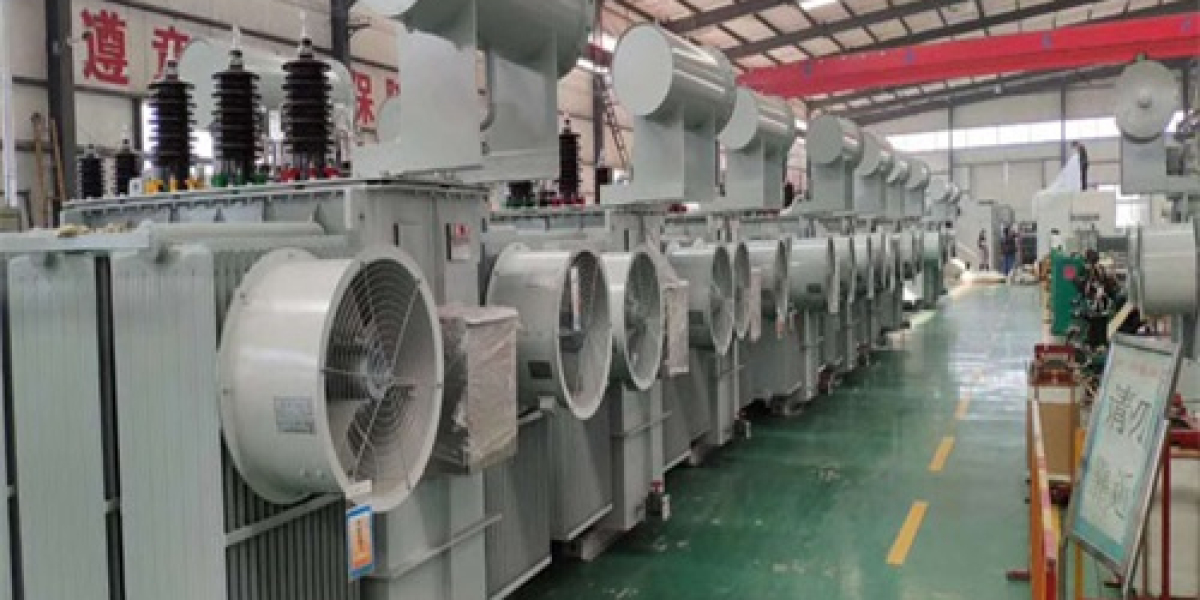
Cooling | Air — natural (AN) or fan-forced (AF) | Insulating oil circulates to radiators (ONAN / ONAF) |
Fire risk | No flammable liquid; lower fire risk indoors | Mineral oil is combustible; needs containment or vault |
Maintenance | Periodic cleaning and inspections; no oil handling | Oil sampling and DGA, filtration; occasional processing |
Environmental | No spill risk; resin disposal to manage | Spill risk to soil and water; SPCC containment |
Typical use | Indoor, commercial, hospital, high-rise, fire-sensitive | Substation, utility, outdoor, large or high-voltage |
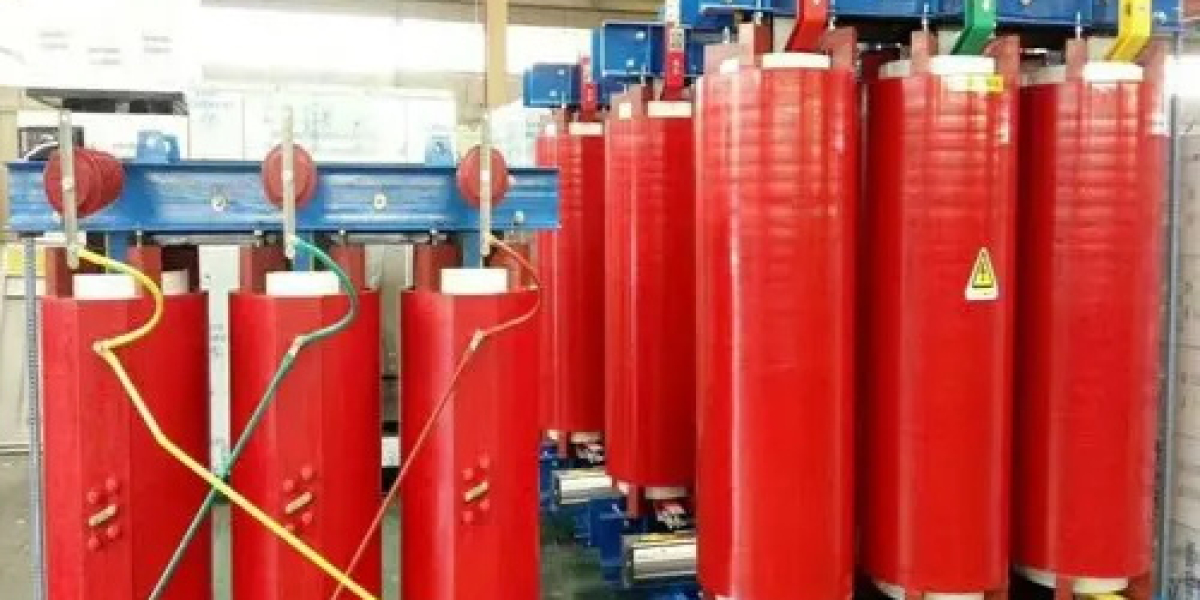
Enclosure | Core and coil visible (or in a NEMA enclosure) | Sealed tank; only the tank exterior shows |
Bushings | Epoxy or silicone-rubber | Porcelain (or composite) |
Capacity and voltage | Typically ≤ 2000 kVA, ≤ 10 kV (some to 35 kV) | Full range, including UHV 1000 kV |
Insulation and heat | Resin-insulated; air-cooled | Oil-insulated; oil carries heat to radiators |
Overload | Continuous at nameplate; limited headroom | Thermal mass gives better short-term overload |
Cost | Higher price per kVA | Lower price per kVA; add containment and vault costs |
2. Cooling method
Oil-immersed transformers use insulating oil as both the dielectric and the coolant. Heat from the windings is picked up by the oil, which rises, travels to the radiators or cooling fins, dumps heat to the ambient air, and circulates back — that is the ONAN / ONAF cycle. Dry-type units skip the liquid. The conductors are wrapped in epoxy resin (cast resin) or varnish-impregnated, and the heat leaves by air: naturally (AN) for smaller units, or with fans (AF) once the load or size passes a threshold. No oil means no pump, no oil-preservation system, and nothing to leak.
3. Fire safety
This is usually the point that settles the argument. Mineral oil is combustible. A tank rupture or a sustained fault can release burning oil, which is why oil units get vaults, fire walls, and separation distances. Dry-type units — especially cast-resin, built to IEC 60076-11 class F1 — carry no flammable liquid, so they go inside buildings, hospitals, high-rises, and data centers without the same fire-protection overhead. That does not make them fireproof; a severe fault can still damage the resin and produce smoke, but there is no burning-pool scenario. In the U.S., NEC Article 450 and NFPA 850 drive the separation and ventilation rules.
4. Maintenance
The source says oil units need regular oil changes. That overstates it. You do not swap oil on a schedule. You sample it — dissolved gas analysis (DGA), moisture, and dielectric strength — and you filter or process it when the tests say so, which for a healthy unit is rare. Dry-type needs no oil handling at all: periodic cleaning of dust and debris, infrared scans, and fan checks if it is fan-cooled. Both need visual and electrical inspection. The honest read: dry-type carries the lighter routine load, oil carries a defined testing program instead of refills.
5. Environmental impact
An oil leak can contaminate soil and groundwater, which is why sites with bulk oil fall under SPCC secondary-containment rules and why many utilities require a curbed pad or containment pan. Dry-type has no liquid to spill. The trade-off is the epoxy or cast resin, which is not something you toss in the bin — end-of-life handling matters, but it is a fraction of the volume and none of the spread risk of a leak. Modern sealed oil units and ester fluids (fire-resistant and biodegradable) narrow the gap.
6. Where each one fits
Oil dominates where size, voltage, and outdoor exposure rule: substations, utility feeders, industrial plants, and anything above the distribution band. Dry-type owns the indoor and fire-sensitive niches — commercial buildings, hospitals, high-rise basements, schools, and data centers — where you cannot afford a flammable-liquid vault. Both designs are in our product catalog.
7. Enclosure and what you can see
Crack open a dry-type unit and you see the core and coils directly (open dry-type), or through a ventilated NEMA 1, 2, or 3R enclosure that still leaves them visible. An oil transformer shows you only the tank, the bushings, and the radiator — everything live is sealed inside the oil. That matters for inspection and for how much you can tell is wrong without opening anything.
8. Bushings and terminations
Dry-type terminations are typically epoxy or silicone-rubber bushings molded to the coil — light, flexible, and clean-looking. Oil units use porcelain bushings (or composite) that pass the conductor through the tank wall and the oil boundary. Porcelain is rugged but can shatter on impact; composite is the lighter, impact-tolerant alternative. Match the bushing to the environment, not the catalog default.
9. Capacity and voltage reach
In distribution practice dry-type tops out around 2000 kVA and 10 kV, with some units built to 35 kV. [Confirm: the maximum dry-type size your market actually stocks.] Oil has no such ceiling — it covers the entire range, and China's 1000 kV UHV lines run on oil-immersed units because nothing else scales that far. For North American specs, read the Chinese 10 kV as 12.47 / 13.8 kV and 35 kV as 34.5 kV, and remember the grid runs at 60 Hz, not 50. More on the fundamentals is in our resources library.
10. Insulation and heat dissipation
Same story as cooling, stated differently: dry-type insulates with solid resin and sheds heat to air (AN, or AF with fans on bigger loads); oil insulates with oil and moves the heat to external radiators by natural or forced circulation. Neither is "better" in the abstract — oil's liquid path scales to huge ratings, air keeps the unit clean and indoor-friendly.
11. Load and overload capability
Dry-type is generally run at its nameplate rating; the headroom is modest, though an H-class temperature rise buys some overload margin. Oil's thermal mass — all that stored oil — lets it ride short-term overloads that would push a dry-type past its limit. If your load spikes hard and often, oil's cushion helps; if your load is steady and indoor, dry-type's simplicity wins. Most dry-type units ship in a Dyn11 (delta-wye) configuration — see how delta-wye transformers work.
12. Cost — and the installed-cost trap
On sticker price, dry-type costs more per kVA, and the gap widens as the rating climbs. But that is only the unit. An oil transformer drags along a containment system, often a vault, fire suppression, and an oil-handling plan — all of which can erase the price advantage or flip it. Before you spec on the tag alone, model the loss and lifecycle cost with our transformer loss and TCO calculator. For sensitive or medical loads, the unit is almost always a dry-type isolation transformer — our isolation transformer guide covers sizing.
13. How to read this when you actually spec
Start with where the unit goes and what surrounds it. Indoor, fire-sensitive, no vault space — dry-type. Outdoor, large, high-voltage, or remote — oil. Then check ventilation and separation against local code — our NEC transformer calculator walks the room rules — and finally price the whole installation, not just the transformer. The 11 differences above are a reference; the decision is almost always location first.
14. FAQ
Which is safer indoors — dry-type or oil-immersed?
Dry-type, almost always, because it carries no flammable liquid. That is why you find it in hospitals, high-rises, and data centers where an oil vault is impractical. Oil is not banned indoors, but NEC Article 450.21 requires a vault or specific separation for larger liquid-filled units, which adds cost and space.
Can a dry-type transformer be installed outdoors?
Yes, if it is built for it. Open dry-type is indoor-only; outside you need a weatherproof enclosure — typically NEMA 3R — and the right ingress rating (IP). Fan-cooled (AF) units need the fans protected too. If the site is wet, dusty, or corrosive, confirm the enclosure class before you buy.
Why does dry-type cost more per kVA than oil?
Because the resin casting, the air-cooling hardware, and the tighter manufacturing tolerances cost more than a tank of oil, and the gap grows with rating. But see the installed-cost point: oil's vault, containment, and fire systems can close or reverse the difference, so compare total installed cost, not the unit price.
Do you need to replace transformer oil on a schedule?
No. You do not change oil like engine oil. You sample and test it — dissolved gas analysis, moisture, dielectric strength — and you filter, degas, or process it only when the results call for it. A healthy sealed unit may go years without any oil work. Dry-type avoids the question entirely.
What is the largest dry-type transformer — when does oil win?
In distribution practice dry-type tops out around 2000 kVA and 10 kV, with some 35 kV units built. Anything larger, higher-voltage, outdoor, or utility-scale goes oil, and the very top of the grid — UHV 1000 kV — is oil only.
Which handles overload better?
Oil, thanks to the thermal mass of all that oil — it soaks up short-term spikes that would push a dry-type past its rating. Dry-type is happiest at a steady nameplate load; an H-class rise gives some margin, but it is not an overload machine. Size for your real peak either way.
Can you put an oil transformer inside a building?
You can, but NEC 450.21(B) generally requires a vault for liquid-filled transformers above 112.5 kVA installed indoors, with listed exceptions. That vault — fire-rated walls, drainage, separation — is why most indoor jobs default to dry-type. Check the exact limit and exceptions with the AHJ.
How do I actually choose between them?
Location first: indoor and fire-sensitive with no vault space points to dry-type; outdoor, large, or high-voltage points to oil. Then confirm ventilation and separation against local code, and price the whole installation. The side-by-side table at the top is your reference; the decision is rarely about the transformer alone.