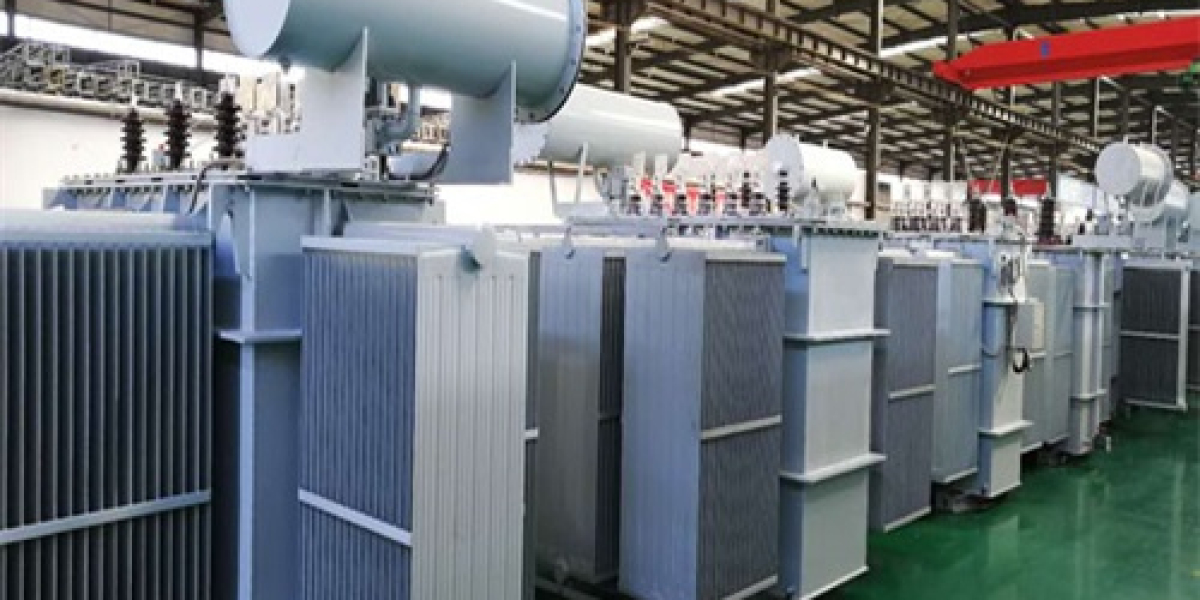

An amorphous alloy oil-immersed transformer replaces the usual grain-oriented silicon steel core with a thin, randomly oriented metal ribbon. The result is a no-load (core) loss roughly 70–80% lower than a standard unit — the biggest energy lever on equipment that stays energized around the clock. Here are the advantages that matter to a buyer, including the tradeoffs most spec sheets leave out.
1. No-load loss is the headline benefit
A conventional core loses energy simply by sitting magnetized, even with nothing connected. Amorphous metal flips that math: its hysteresis loop is narrow and its coercivity is low, so it takes far less energy to magnetize and demagnetize the core on every AC cycle. Against a standard grain-oriented silicon steel core, no-load loss typically drops to roughly one-fifth — about a 70–80% reduction.On a transformer that runs empty or lightly loaded for most of its life, that gap is where the money is.
For the rest of our liquid-filled line, see the oil-immersed transformer range.
2. What the energy saving actually buys you
Lower no-load loss means the unit draws less magnetizing power from the grid every hour of every day. Two consequences follow. First, operating cost drops — at typical commercial electricity prices the saved core loss pays back a meaningful slice of the premium over the equipment's life. Second, because less generation is required upstream, the indirect station-side emissions of CO₂, SO₂, and NOₓ fall in proportion. The transformer itself burns no fuel; the environmental case rides entirely on avoided generation.
3. High permeability, low coercivity
Permeability is how easily the core accepts magnetic flux; coercivity is the field you must apply to reset it. Amorphous ribbon scores well on both. For the same flux the core carries, iron loss is lower than silicon steel, so more of the magnetizing energy becomes useful field rather than heat. Low coercivity compounds the effect — less driving field, less loss. In practice this is why an amorphous unit holds its efficiency advantage across a wide load range, not just at one design point.
The magnetic fundamentals are covered in more depth across our resources library.
4. Noise — and the catch nobody mentions
A well-built amorphous transformer is quiet: tight core clamping and good manufacturing control keep vibration and hum down, which matters in hospitals, schools, and city substations. The catch is that amorphous ribbon has higher magnetostriction than silicon steel, so a poorly braced core will actually hum louder, not quieter. Low noise is an outcome of good mechanical design, not a property you get for free from the material. Ask the vendor how the core is braced and what sound level (dB(A)) is guaranteed at the nameplate rating.
5. Service life and reliability
Oil immersion spreads heat evenly through the winding and core, so there are fewer hot spots to drive insulation aging. Amorphous metal also resists corrosion better than standard electrical steels, which helps in humid or coastal sites. Together these support a long, low-maintenance service life and fewer forced replacements.Note the ribbon's softening temperature is low compared with silicon steel, so the design relies on staying well inside normal operating temperatures — normal operation is fine, but the unit is not field-reannealable like a conventional core.
6. The economics: pay more up front, recover it in losses
The amorphous core costs more than silicon steel, so the sticker price is higher. The offset is steady: lower no-load loss shaves the energy bill every year for the life of the unit. Whether the premium pays back depends on your electricity price, how lightly the transformer is loaded, and how many hours it runs. Run your own numbers through our loss and total-cost-of-ownership calculator before you commit — the payback that looks marginal at full load often looks excellent at the light, always-on loading most distribution transformers actually see.
7. Where it fits, and the U.S. compliance angle
Spec an amorphous oil-immersed unit where the load is light or variable and the transformer runs continuously — commercial buildings, light industrial, renewable collection points, and anywhere a utility rewards low-loss equipment. Electrically it behaves like any other oil-filled transformer, so NEC Article 450 and the usual utility interconnection rules apply; some programs even require low-loss designs. For U.S. installations, our NEC calculator walks through the clearance, overcurrent, and protection rules that govern the install.
See where units like this are already running in our projects archive.
8. FAQ
How much no-load loss can I actually save?
Roughly 70–80% versus a conventional grain-oriented silicon steel core — the no-load loss drops to about one-fifth. The exact number depends on the rating and how the core is built, so confirm it against the type-test report rather than a catalog average.
Is an amorphous transformer quieter or noisier than a silicon-steel one?
It can be either. The material has higher magnetostriction, so a loosely braced core hums more. A properly clamped, well-built unit is quiet and suits noise-sensitive sites like hospitals and schools. Ask for a guaranteed sound level in dB(A) at nameplate rating.
Does the lower loss qualify for rebates or efficiency programs?
Possibly. U.S. distribution transformers are covered by DOE 10 CFR Part 431 Subpart K, and many utilities run rebate or low-loss incentive programs. Whether a specific amorphous unit qualifies depends on the program and the tested loss values.
What are the real downsides?
Higher upfront cost, the noise caveat above if the core is poorly braced, and the ribbon's low softening temperature, which means the design must stay well inside normal operating temperatures and the core can't be field-reannealed. None of these are disqualifying, but they belong in the spec conversation.
How does service life compare with a standard oil transformer?
Similar or better, driven by even temperature distribution from oil cooling and the material's corrosion resistance. Real figures depend on duty cycle, ambient, and maintenance.
When does the higher purchase price pay back?
When the transformer runs lightly loaded and continuously — the exact case for most distribution units. Payback shortens as electricity price rises and load factor falls. Model it with a loss-and-TCO calculator rather than guessing; the answer is highly sensitive to your tariff.
Will it pass NEC and utility interconnection?
Electrically, yes — it follows the same rules as any oil-filled transformer under NEC Article 450, and utilities apply their standard interconnection and efficiency requirements. Some utilities specifically require low-loss designs, which an amorphous unit helps meet.