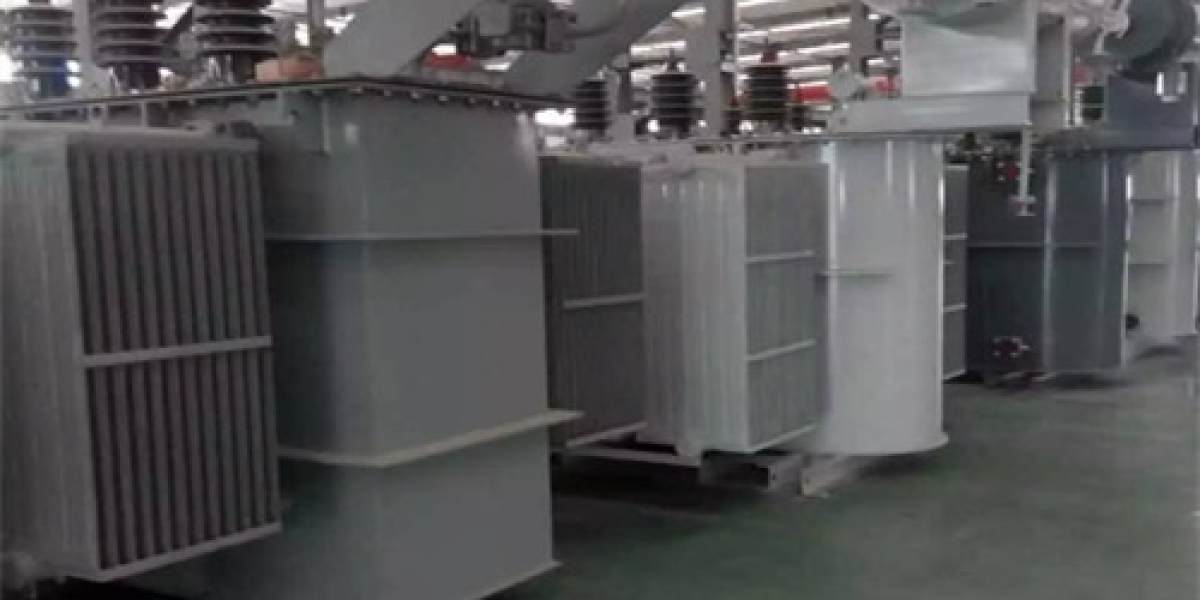

The S20 is a silicon-steel, oil-immersed distribution transformer that sits one tier above S11 and S13 on China's GB 20052 efficiency ladder. The case for specifying it comes down to lower losses, a tightly built core and winding, simple upkeep, tolerance for rough site conditions, and built-in oil-temperature protection. U.S. buyers should benchmark the grade against DOE 10 CFR Part 431 Subpart K rather than the S-number alone.
1. Efficiency: lower no-load and load losses
The S20 earns its position on the efficiency ladder by cutting both loss components, not just one. It uses higher-grade cold-rolled grain-oriented (CRGO) core steel and a tighter magnetic design, which drops the no-load (core) loss, while better conductor sizing and reduced stray losses bring the load (copper) loss down.
Vendors typically quote roughly 10% lower no-load loss and 20% lower load loss than an equivalent S11 or S13. [Confirm those figures against the type-test report before you put them in a bid — loss numbers travel badly when quoted from a brochure.] Lower losses are what actually pay you back: every kilowatt saved at no-load runs 8,760 hours a year, and every point of load loss matters wherever the transformer sits above half load.
Run your own duty cycle through the loss and total-cost-of-ownership calculator to see the payback in dollars, not marketing points.
Loss type | What it is | Why the S20 helps |
|---|---|---|
No-load (P₀, core) | Loss with the transformer energized, no load | Higher-grade CRGO and tighter core design |
Load (Pₖ, copper) | Loss that scales with load squared | Better conductor sizing, lower stray loss |
2. Build quality: materials and manufacturing
The S20 leans on the same things that make any transformer durable: a high-grade CRGO core that is carefully stacked and clamped, windings built to consistent tension and geometry, and a clean, disciplined assembly. Those details are what keep stray losses low and hold the unit together across decades of thermal cycling.
One correction worth flagging: oil-immersed transformers don't use cast coils. Cast resin is a dry-type (SCB-series) construction. The S20's windings are wound conductors insulated for service in oil, so any spec or marketing line that says "cast coil" for an oil-filled S20 is mixing up the two technologies. Keep that straight when you compare oil versus dry-type units.
See the S20 unit and the rest of the oil-immersed line for ratings, weights, and outline drawings.
3. Maintenance: simple and infrequent
There isn't much to maintain on an oil-filled distribution transformer, and the S20 is no exception. No moving parts to wear out. The routine work is oil sampling, checking the breather or conservator on free-breathing units, and periodic electrical testing — the same cadence you'd apply to any transformer in this class.
A better-built core and winding also means a lower failure rate than older S11-era designs, which translates directly into fewer unplanned outages and less lost production. For a piece of equipment that's meant to sit unattended for years, "boring to maintain" is a feature.
4. Site tolerance: environment and load
Oil-filled construction shrugs off the things that bother dry-type units outdoors. Dust, humidity, and temperature swings are less of a threat to a sealed or well-protected tank than to an open dry-type coil, which is why oil units dominate substations, industrial yards, and utility distribution.
On loading, the S20 follows the same physics as every transformer: how hard you can push it depends on how long the overload lasts. The IEEE C57.91 loading guide (the ANSI/IEEE standard) lays out exactly how much overload is allowed for how long before the insulation takes damage. [Confirm the overload table for your specific rating — the curves, not a rule of thumb, are what protect the unit.] A wider comfortable load range is real, but it's governed by that loading guide, not by a marketing claim.
5. Safety: oil construction and thermal protection
Oil does three jobs at once: it insulates, it removes heat, and it buffers the windings from moisture and contaminants. That's the core reason oil-filled units are trusted in outdoor and industrial settings.
Modern S20 units carry an oil-temperature indicator or controller (OTI/WTI) with alarm and trip contacts, so you get warned — and, if needed, automatically disconnected — before the oil overheats and ages the insulation. Larger units add a Buchholz gas relay and a pressure-relief device.
One caveat that the "oil is safer" framing often skips: indoor siting of oil-filled transformers is constrained by NFPA 850 and NEC Article 450, which frequently push indoor or occupied spaces toward dry-type instead. Check clearances and the applicable rules with the NEC compliance calculator, and read the supporting material in our resources library.
6. When the S20 is the right call — and when it isn't
The S20 is a strong mid-tier pick for outdoor, utility, and industrial distribution where oil is acceptable and you want better losses than S11/S13 without jumping to the top of the efficiency ladder.
It is not the ceiling, though. If the transformer runs lightly most of the time — think rural feed or a continuously energized but lightly loaded unit — an S22 or an amorphous-core SH15 will save more, because no-load loss is what dominates a light duty cycle. And if the site is indoor or occupied, code will often steer you to a dry-type SCB unit regardless of how good the oil-filled S20 looks on paper.
Above roughly 2,500 kVA, confirm which efficiency rule even applies; the U.S. distribution-transformer efficiency standard covers certain liquid-filled units up to a limit, and beyond it you have to contract the losses explicitly rather than rely on a compliance tier.
7. Pre-specification checklist
Before you write the S20 into a spec, confirm:
- No-load and load losses (P₀ / Pₖ) against the type-test report, not the brochure. [Confirm]
- Cooling class (ONAN, ONAF, or both) and the corresponding ratings.
- Impedance, tap range, and whether an on-load tap changer is needed.
- Temperature protection: OTI/WTI with alarm and trip, plus Buchholz and pressure relief on larger units.
- Certifications for your market — DOE 10 CFR Part 431 Subpart K, IEEE C57.12.00 / C57.12.20, and UL where required. [Confirm]
- Indoor versus outdoor siting and the fire-code implications (NFPA 850, NEC Article 450).
Where these units are already running in the field, see our projects archive.
8. FAQ
What does "S20" actually mean?
It's a Chinese efficiency-class designation for silicon-steel oil-immersed transformers under GB 20052 — one step above S11/S13 and below S22. The U.S. doesn't use the S-number; benchmark the unit against DOE 10 CFR Part 431 Subpart K efficiency levels for liquid-filled distribution transformers.
How much energy does an S20 save versus S11 or S13?
Manufacturers typically quote about 10% lower no-load loss and 20% lower load loss than S11/S13 at the same rating. Treat those as vendor figures and verify them against the type-test report. For your actual duty cycle, the loss/TCO calculator shows the real payback.
Is the S20 oil-immersed or dry-type?
Oil-immersed. Its windings sit in insulating oil inside a tank, which is different from cast-resin dry-type units (the SCB series). Don't let the two get conflated when specifying — cooling, siting, and protection rules are not the same.
Can an S20 be installed indoors?
Sometimes, but it's constrained. Indoor oil-filled transformers generally need a fire-rated vault and must comply with NFPA 850 and NEC Article 450. Many indoor or occupied spaces default to dry-type instead. Outdoor substations and industrial yards are where oil-filled S20 units are most at home.
What does the temperature controller actually do?
It reads oil (and often winding) temperature through sensors and drives local indication plus alarm and trip contacts. That lets you catch overheating before it ages the insulation or forces a trip. Larger units add a Buchholz relay and a pressure-relief device.
Is S20 the most efficient transformer available?
No. Within the Chinese ladder, S22 is the next step up, and amorphous-core (SH15) units cut no-load loss further — attractive where the transformer runs lightly most of the time. S20 is a sensible mid-tier choice, not the efficiency ceiling.
What should I confirm on the datasheet before specifying an S20?
Losses (P₀ no-load, Pₖ load), impedance, cooling class (ONAN/ONAF), tap range, whether you need an on-load tap changer, temperature protection, and the certifications that apply to your market (DOE 10 CFR 431, IEEE C57.12, UL where required).
Does the U.S. market recognize the S20 grade?
Not by name. U.S. buyers evaluate liquid-filled distribution transformers against DOE 10 CFR Part 431 Subpart K and IEEE C57.12.00 / C57.12.20. Use the S-number as a rough efficiency hint, then check the actual loss values and the applicable efficiency rule.