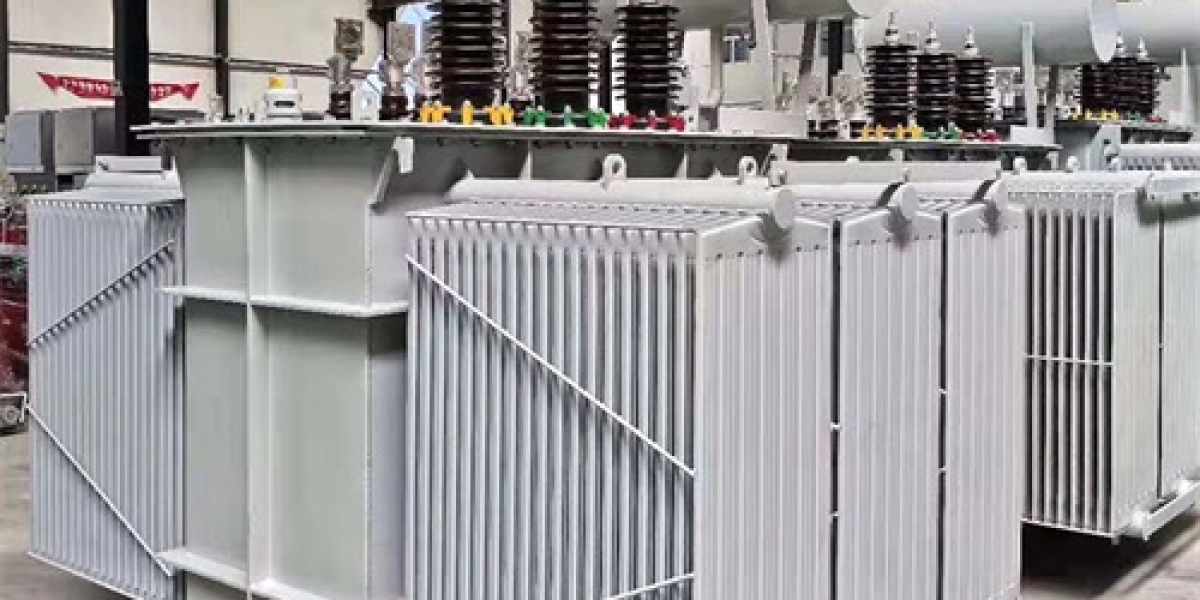

China sorts oil-immersed transformers into three efficiency tiers — Grade 1, Grade 2, and Grade 3 — under GB 20052, set by no-load and load-loss limits rather than a single efficiency percentage. An S13 lands at Grade 3, the minimum; you need an S20-class core or better to reach Grade 2. The 2024 revision took effect February 1, 2025, tightening the limits and pulling PV, wind, and storage units into scope.
1. What the grades actually measure
GB 20052 defines each tier by loss caps — the no-load loss (P0) and the load loss (Pk) at the reference temperature — not by a flat "efficiency ≥ X%." The 98% / 96% / 94% figures you see quoted for Grades 1, 2, and 3 are a simplified way the market summarizes the tiers. Real oil-filled distribution transformers already run above 98% efficiency at rated load, because these are inherently efficient machines; the number that actually binds a purchase is the loss limit.
Judge a unit by its tested P0 and Pk against the standard, not by the headline percentage.
2. The three tiers at a glance
Tier | Stated efficiency at rated load (market shorthand) | What it really signals | Where it fits |
|---|---|---|---|
Grade 1 (一级) | ≥ 98% (representative) | Tightest P0 and Pk loss caps | Premium, high-duty, or subsidy-driven specs |
Grade 2 (二级) | ≥ 96% | Mid loss caps; S20-class core or better | General efficient specification |
Grade 3 (三级) | ≥ 94% | Minimum allowable (MEPS); S13-class | Compliance baseline only |
These percentages are shorthand. GB 20052 binds on loss limits, and the grade is assigned from tested loss values, not declared efficiency.
3. Grades and model families
Model families climb the efficiency ladder, but the number on the nameplate does not by itself prove a grade — the grade comes from tested losses against the standard.
Family | Loss vs GB/T 6451 baseline | GB 20052 grade | Note |
|---|---|---|---|
S11 | Baseline | Grade 3 | Older silicon-steel design |
S13 | More than 10% lower | Grade 3 | Improved, but still the minimum tier |
S20 | — | Grade 2 | First family the source cites for Grade 2 |
S22 | — | Above Grade 2 [Confirm] | Next step up the ladder |
The S13's "more than 10% below GB/T 6451" is a design claim, not a Grade 2 result — it stays in Grade 3. To clear Grade 2 you move to an S20-class oil-immersed transformer or better. For the full liquid-filled catalog, see the products page.
4. Where the standard applies
Segment | Voltage | Capacity | Frequency / tap | Notes |
|---|---|---|---|---|
Distribution | 10 kV, three-phase | 30–2500 kVA | 50 Hz, off-load tap | NLTC |
Power | 35–500 kV | ≥ 3150 kVA | 50 Hz |
|
New energy | 6–35 kV and 66 kV | Application-specific | 50 Hz, off-load tap | PV / wind / storage |
Every band above is 50 Hz. For 60 Hz export markets the equivalent design has to be re-rated, so raise the frequency requirement in the RFQ. We have covered new-energy installs of this kind in the projects archive.
5. What GB 20052-2024 changed
- Effective February 1, 2025 (per the source; confirm the edition and date before you quote it).
- Tightens the loss limits across all three tiers.
- Adds energy-efficiency limits for new-energy generation-side three-phase transformers — PV, wind, and storage — at 6–35 kV and 66 kV.
- Replaces the prior GB 20052-2020 loss limits.
More background on standards and compliance lives in the resources library.
6. How this maps to the U.S. and other markets
For U.S. and export buyers, GB 20052 is a China minimum energy performance standard (MEPS). It does not apply outside China, and a U.S. specification should cite the destination-market rule, not a GB grade. The functional equivalents:
- United States — DOE 10 CFR Part 431 Subpart K. Section 431.197 covers liquid-immersed distribution transformers and sets no-load and total-loss limits by kVA. Do not confuse it with §431.196 (low-voltage dry-type) or the unrelated §430 appliance rule.
- IEEE — C57.12.00 (general requirements), C57.12.10 (liquid-filled design), and C57.12.90 (test procedure) form the design and verification basis.
- European Union — Regulation (EU) 548/2014 covers distribution transformers, including liquid-filled units up to 3150 kVA.
- Canada — NRCan Energy Efficiency Regulations (references CSA C802.1 / C802.2).
If you are weighing oil against dry-type for an efficiency-driven job, our oil vs dry-type comparison covers the trade-offs.
7. How to pick a grade
- Match grade to duty. Lightly loaded or intermittent service may justify Grade 3; continuous or heavy load pays Grade 2 back through lower losses every hour it runs.
- Lifecycle cost beats sticker price. Grade 2's lower P0 and Pk save energy across the whole operating life, not just at purchase.
- Check incentives. Some utilities and programs require a minimum tier, which can flip the math toward Grade 2.
- Spec the destination standard for export. Cite DOE/IEEE, EU 548/2014, or NRCan — not GB 20052 — when the unit ships outside China.
8. FAQ
What is the difference between Grade 1, 2, and 3 efficiency?
They are three loss tiers under GB 20052. Grade 3 is the minimum allowable (MEPS); Grade 2 tightens the no-load and load-loss caps; Grade 1 is the tightest. The market often quotes them as about 94% / 96% / 98% efficiency at rated load, but the standard binds on loss limits, and real oil-filled units already run above 98% efficiency.
Is an S13 transformer high efficiency?
Not under GB 20052. The S13 family cuts no-load and load losses more than 10% below the older GB/T 6451 baseline, but it still lands in Grade 3, the minimum tier. To reach Grade 2 you need an S20-class core or better. Do not let "improved losses" read as "premium efficiency."
Does GB 20052 apply to projects in the United States?
No. GB 20052 is China's MEPS. U.S. liquid-filled distribution transformers are governed by DOE 10 CFR Part 431 Subpart K (§431.197), built to IEEE C57.12.00, and verified by C57.12.90 testing. Specify DOE compliance for a U.S. job, not a GB grade.
What changed in GB 20052-2024?
Per the source, the 2024 edition took effect February 1, 2025, tightens the loss limits across the tiers, and adds efficiency limits for new-energy generation-side three-phase transformers — PV, wind, and storage — at 6–35 kV and 66 kV.
How do I read the efficiency grade on a nameplate?
A nameplate will not print "Grade 2." Look at the tested no-load loss (P0) and load loss (Pk), and ask the supplier for the GB 20052 compliance certificate showing the tier. For U.S. units, ask for the DOE compliance statement and the loss values instead.
Which grade should I specify?
It depends on duty and lifecycle cost. Continuous or heavy load justifies Grade 2 through lower losses; intermittent or light load may make Grade 3 acceptable. Check for utility incentives that require a minimum tier, and for export specify the destination standard (DOE, EU 548/2014, or NRCan), not GB 20052.
Does this standard cover dry-type transformers too?
GB 20052 covers both oil-immersed and dry-type power transformers, but with separate loss limits. This article stays within the oil-immersed scope the source describes. The two insulation media are compared separately for efficiency-driven specs.