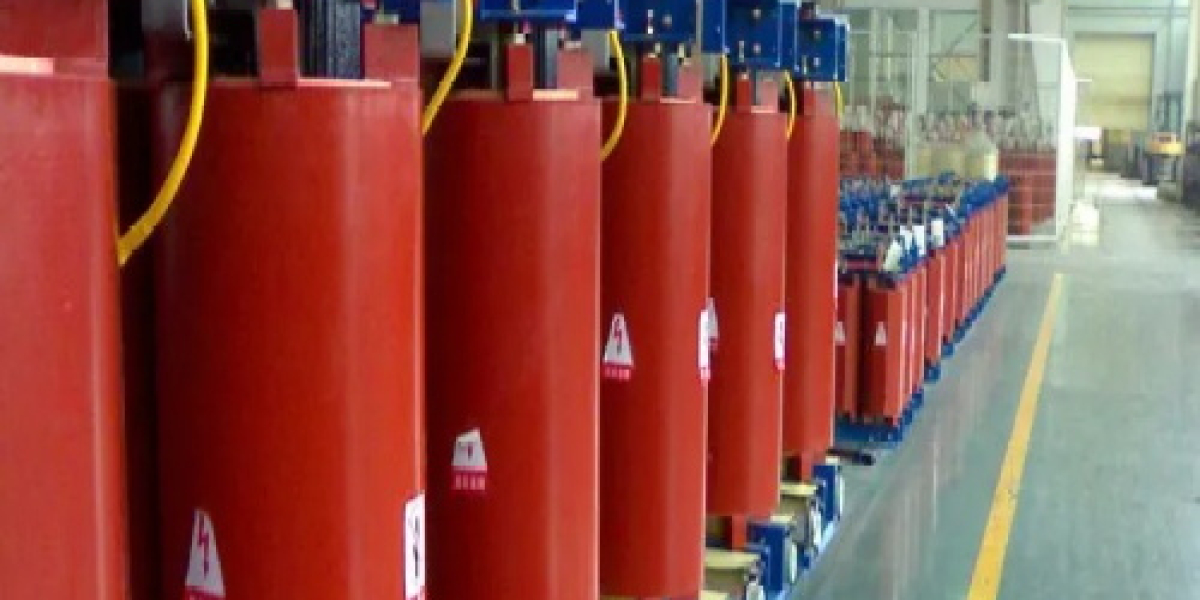

The SCB14 cast-resin dry-type transformer is a non-flammable, low-maintenance unit built for data centers, hospitals, and commercial buildings where fire safety is non-negotiable. This procedure lays out the pre-start checks, energizing and shutdown steps, monitoring, and emergency actions that keep it running without damaging the equipment or hurting anyone. The field rule is simple: inspect before you operate, de-energize before you maintain.
1. Pre-Operation Checks
Environment
- Ambient temperature: keep it at or below 40°C (104°F); the sweet spot is 20–30°C (68–86°F). Higher heat accelerates insulation ageing.
- Humidity: relative humidity at or below 90% with no condensation. Add a dehumidifier if the room runs damp.
- Ventilation: the transformer room needs real airflow. Keep the air inlet and outlet at least 1.5 m (about 5 ft) apart so the unit isn't recycling its own hot exhaust.
Equipment
- Visual: no damage, deformation, or foreign objects on the windings, core, or clamping structure.
- Fasteners: high- and low-voltage terminals and the grounding bolt must be tight — for an M12 bolt, at least 35 N·m (about 26 ft·lb).
- Insulation resistance: measured with a 2500 V megger, at or above 1000 MΩ at 20°C (68°F).
Tools and PPE
- Insulating gloves rated for the system voltage (the Chinese source calls for 10 kV-rated gloves; in North America use ASTM-rated rubber insulating gloves matched to the actual voltage class — for a 12.47 kV / 13.8 kV system that is typically Class 2).
- Insulating boots, a voltage tester (10 kV-class in the source; use a CAT-rated tester matched to the system), a grounding cable, and a fire extinguisher rated for electrical fires (dry chemical or CO₂).
2. Energizing Step by Step
Work in order. Don't skip the confirmation steps.
Before closing
- The high-voltage switchgear is in the OPEN position and the earthing switch is withdrawn.
- The low-voltage main breaker is OPEN.
High-voltage side
- Put on the insulating gloves and use the voltage tester to confirm the high-voltage side is dead.
- Close the HV breaker in stages and listen to the transformer. A healthy unit makes a steady hum; any knock, crackle, or buzz that isn't uniform means stop.
Low-voltage side
- Wait about 5 minutes so the transformer settles under no load.
- Close the LV main breaker and check the voltmeter: the reading should sit within ±5% of the rated voltage.
Loading
- Bring loads on in batches by capacity. Avoid a sudden overload. The SCB14 can carry 1.2× rated load continuously for about 2 hours.
3. Operation Monitoring and Maintenance
Daily inspection
- Temperature: use an infrared thermometer on the winding hot spot; keep it at or below 130°C (266°F). Set the over-temperature alarm at 120°C (248°F).
- Sound: any discharge or cracking noise means shut it down.
- Smell: a burnt odor usually signals failing insulation — investigate immediately.
More on test intervals and acceptance values is in our resources library.
Scheduled maintenance
Task | Interval | What to do |
|---|---|---|
Tightening check | Every 6 months | Check HV and LV terminals and the grounding bolt for looseness. |
Cleaning | Every 1 year | Blow dust off the winding surfaces with dry compressed air at ≤ 0.5 MPa (about 73 psi). Never use a wet rag or liquid cleaner. |
Insulation test | Every 3 years | Measure winding-to-ground resistance and compare with history; a drop over 30% means it's time for service. |
Over-temperature protection
The SCB14 normally carries a three-stage temperature system:
Winding temp | Action |
|---|---|
100°C (212°F) | Cooling fan starts (if fitted). |
130°C (266°F) | Over-temperature alarm — check load or ventilation. |
150°C (302°F) | Over-temperature trip — supply interrupted. |
4. De-Energizing (Shutdown)
- Drop all LV load breakers first, then open the LV main breaker.
- Once the LV side is confirmed dead, open the HV switchgear breaker.
- Hang a "Danger: Do Not Close — Personnel Working" tag (the U.S. equivalent of the Chinese lockout tag) on the disconnect.
- After verifying zero voltage with a tester, close the earthing switch so the transformer is fully discharged.
5. Emergency Response
Fire
Cut the power first, then use a dry chemical or CO₂ extinguisher. Never use water or a foam extinguisher on an electrical fire.
Short circuit
After a trip, look for burn marks, measure insulation resistance, and only re-energize once the fault is cleared and confirmed.
Electric shock
Kill the supply, move the victim to safety with an insulating tool, start CPR, and call emergency services.
6. Safety Rules
Prohibited actions
- Never work live on the HV or LV terminals.
- Never stack objects on top of the transformer or cover it with a dust sheet.
- Never run an SCB14 in a damp, unenclosed space such as an open basement.
Protection
- HV work requires insulating gloves and boots plus an insulated operating rod.
- LV work calls for eye protection against arc flash.
Training
Operators need a valid electrician's qualification (the Chinese source requires the Special Operations Electrician Certificate) and annual safety retraining. In the U.S., the equivalent is a qualified electrical worker under NFPA 70E and OSHA. [Confirm: map the training requirement to your local licensing regime.]
7. Two Failure Cases
Case 1 — A loose terminal started a fire. At a data center, an SCB14 low-voltage terminal worked loose. The rising contact resistance created a local hot spot that eventually burned out the winding. The lesson: periodic tightening checks are what actually prevent most transformer fires.
These failure modes are not theoretical — they show up across our field installs; see the projects archive.
Case 2 — Prolonged overload destroyed the insulation. At a factory, an SCB14 ran long-term at 150% load. The winding temperature passed 150°C without tripping and the insulation carbonized into a short. The lesson: size the temperature protection correctly and watch the load factor.
8. Summary and Recommendations
The core idea stays the same: inspect before you operate, de-energize before you maintain. Temperature, insulation, and tightness are the three things to watch.
If you are weighing dry-type against oil-filled for a given site, our guide on what a dry-type transformer is and how to choose one walks through the trade-offs. We build the full SCB and oil-immersed range on our products page.
Recommendations:
- Buyers: ask the manufacturer for a dedicated SCB14 safety manual and training.
- Operators: keep an equipment log of inspections, maintenance, and faults, and add monitoring (winding temperature, partial discharge) for predictive maintenance.
- Risk note: never alter the temperature-protection setpoints — doing so can wreck the unit or start a fire. At end of life, dispose of it responsibly: the copper windings and core are recyclable, and the insulating material needs proper treatment.
9. FAQ
What efficiency grade is the SCB14, and should I trust the "Grade 1" label?
The Chinese source markets the SCB14 as a high-efficiency unit, rated Grade 1 under GB 20052. [Confirm: efficiency grade is set by loss limits for the specific kVA rating and the edition of GB 20052 in force — it is not fixed by the model suffix. U.S. buyers verify compliance through DOE 10 CFR 431 Subpart K §431.196 (low-voltage dry-type) and IEEE C57.12.51, not the Chinese grade label.]
What PPE do I need to operate an SCB14?
For high-voltage work: voltage-rated insulating gloves and boots, an insulated operating rod, and a CAT-rated voltage tester. The source specifies 10 kV-rated gloves, which in North America maps to ASTM-rated rubber insulating gloves matched to the actual system voltage (Class 2 for a 12.47 kV / 13.8 kV system).
At what temperature does the transformer trip?
The three-stage system acts at 100°C (212°F) — fan on; 130°C (266°F) — alarm; 150°C (302°F) — trip and disconnect. If the unit passes 150°C without tripping, the protection settings are wrong and must be fixed before restart.
How often should I megger the windings?
The source calls for an insulation-resistance test every 3 years, comparing against history; a drop over 30% from baseline means service is due. The field pass value and the 2500 V test voltage are rating-specific, so confirm them against the nameplate.
Can I wipe the windings with a damp cloth?
No. Clean only with dry compressed air at ≤ 0.5 MPa (about 73 psi). A wet rag or liquid cleaner can drive moisture into the insulation and trigger a failure.
What extinguisher is safe for a dry-type transformer fire?
A dry chemical (ABC) or CO₂ extinguisher. Never use water or foam — this is an electrical fire and the goal is to cut power first, then extinguish with a non-conductive agent.
Do I need a licensed electrician to run this procedure?
Yes. The source requires China's Special Operations Electrician Certificate plus annual retraining. In the U.S. the equivalent is a qualified electrical worker under NFPA 70E and OSHA; energizing and live work are not for untrained staff.