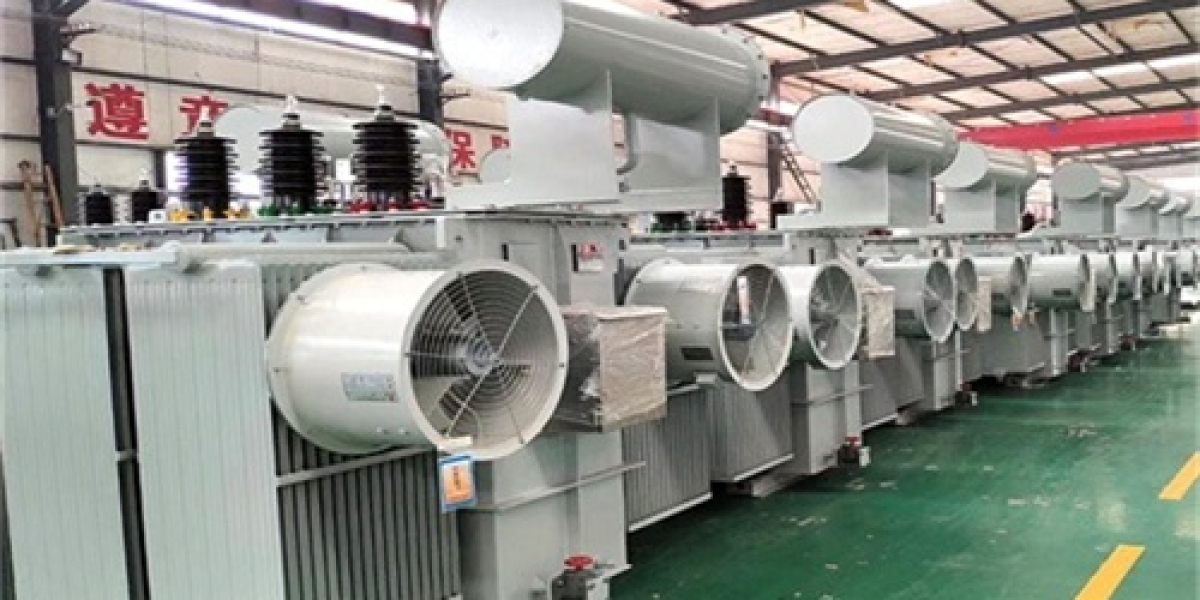

The S20 oil-immersed transformer is normally set on a concrete pedestal at least 300 mm (about 12 in) above finished grade, with a perimeter drainage channel that keeps the tank base clear of standing water. Pole-mounted versions follow a different rule entirely — roughly 2.5 m from grade to the tank base and 3.5 m to any live part — which lines up with NESC overhead clearances rather than the pad height. The number you actually need depends on whether the unit sits on the ground or hangs on a pole.
1. What "foundation height" actually covers
Most confusion about transformer foundation height comes from mixing up two numbers that have nothing to do with each other. One is the height of the concrete pedestal the tank rests on at ground level. The other is the clearance between the equipment and the ground when the unit is pole-mounted or rack-mounted overhead. The S20 guidance cited here quotes both, which is why the figures look inconsistent if you read them as a single rule.
- Ground-mounted (pad) installation: the "height" is the pedestal the transformer sits on.
- Overhead or pole installation: the "height" is the vertical safety clearance, not a foundation dimension.
Keep those two separate and the rest of the spec stops contradicting itself.
2. The 300 mm concrete pedestal (ground-mounted S20)
For a ground-level S20, the quoted practice is a concrete pedestal no lower than 300 mm (about 12 in) above finished grade, with a drainage channel or gutter run around the perimeter. The intent is simple: keep the tank base and any cable termination boxes above surface water, and give the unit a stable, level footing.
North American practice has no single NEC-mandated pedestal height, but a 100–300 mm (4–12 in) concrete pad above grade is the common field standard for liquid-filled units because it solves the same two problems — water and stability.
A few points that trip people up:
- The pad should be continuous and level, overhanging the tank footprint by at least on each side.
- Anchor bolts or grout must match the transformer's foundation drawing, not a generic guess.
- The 300 mm is measured from finished grade to the top of the pedestal — not to the bottom of the tank.
For the exact weight, oil volume, and bolt pattern of your unit, pull the drawing from the product page; the pedestal has to match it. The S20 oil-immersed transformer line is detailed here: S20 oil-immersed transformer. For the full liquid-filled catalog, see the products page.
Item | Source value (Chinese practice) | North American note |
Pedestal minimum height | ≥ 300 mm above finished grade | 100–300 mm (4–12 in) common; confirm with AHJ |
Perimeter drainage | Required drainage channel / gutter | Slope pad and grade away from unit; catch basin if needed |
Purpose | Keep tank base dry; stabilize | Same; also eases visual inspection |
3. Drainage and oil containment around the base
A drainage channel only works if water actually moves away from the transformer. Grade the surrounding surface to fall away from the pad, and size the perimeter channel for the local design storm, not just a light rain. In freezing climates, keep the channel shallow and free-draining so it doesn't hold ice against the tank base.
Oil containment is a separate issue. A single small distribution transformer on its own pad rarely triggers federal spill rules by itself, but many utilities, campuses, and industrial sites require secondary containment — a curbed pad, containment pan, or impermeable berm — for any fixed oil volume above a local threshold. [Confirm: SPCC applicability and the volume threshold for your site; ask the environmental or safety contact, not the transformer vendor.] Don't assume "it's only one transformer" gets you out of containment if the site already stores bulk oil nearby.
We go deeper on spill thresholds and containment designs in the resources library.
4. Overhead and pole-mounted clearances (2.5 m / 3.5 m)
The figures of 2.5 m from grade to the bottom of the enclosure and 3.5 m from grade to any live (bare) conductor apply to overhead and pole-mounted installations, not to a pad-mounted S20. They are safety clearances, not a foundation dimension, and they come from the same family of rules as the U.S. National Electrical Safety Code (NESC).
Roughly:
- 2.5 m ≈ 8.2 ft — close to NESC clearance for lower-voltage and secondary exposures in limited-access areas.
- 3.5 m ≈ 11.5 ft — close to NESC clearance for primary conductors (for example, the 12.47 kV class) in limited-access areas.
The exact numbers shift with system voltage, whether the public can walk underneath, and the edition of the code. [Confirm: pull the clearances from the current NESC edition and your local amendment before setting pole height.] Reading these as "how tall the foundation is" is the most common misread of the whole spec.
Scenario | Source figure | What it really is | U.S. reference |
Ground-mounted pad | ≥ 300 mm pedestal | Foundation height | NEC 450 + site civil detail |
Bottom of enclosure (pole) | 2.5 m min | Clearance to grade | NESC clearance tables |
Live part to grade (pole) | 3.5 m min | Clearance to grade | NESC clearance tables |
5. How GB 50148-2010 maps to U.S. codes
The source cites GB 50148-2010, the Chinese code for installation and acceptance of power transformers, oil-immersed reactors, and instrument transformers. There is no U.S. document with that number; the closest functional equivalents are:
- NFPA 70 (NEC) Article 450 — general transformer installation: overcurrent, ventilation, and fire separation.
- IEEE C57.12.20 / C57.12.23 / C57.12.24 — pad-mounted, submersible, and dead-front liquid-filled distribution transformers.
- ANSI C2 (NESC) — clearances and grounding for overhead installations.
- IEEE C57.91 / C57.12.00 — loading guide and general requirements.
None of these dictates a 300 mm pedestal; they govern clearances, fire separation, and wiring methods. Pedestal height stays a civil and mechanical detail driven by drainage and stability, validated by the project structural engineer. If your S20 is leaving China, read the standards mapping in our IEC 60076 vs ANSI/IEEE guide for export units.
6. What drives the number: drainage, stability, and code
Three things push the pedestal height up or down:
- Drainage — the pad must clear the local design storm, not just average weather. Flat, clay, or flood-prone sites want the higher end of the range.
- Stability — a larger S20 (more kVA, more oil) needs a wider, stiffer pad. Skimp here and you get settlement cracks and misaligned bushings.
- Code — overhead clearances override the pedestal question entirely for pole mounts.
The 300 mm figure is a reasonable minimum that satisfies drainage and gives a stable base; it isn't a magic number, and on a wet or unstable site you go higher. Match the choice to the actual ground, not to a single line in a spec sheet.
7. Pre-pour checklist
Before the concrete goes down, confirm:
- Pad height and footprint match the approved transformer foundation drawing, not a generic 300 mm.
- Finished grade falls away from the pad on all sides.
- Perimeter drainage connects to a real outfall, not a dead pocket.
- Secondary oil containment is specified where the site requires it. [Confirm]
- Anchor bolt pattern and embed depth are called out by the structural engineer.
- Overhead clearances (if pole-mounted) are taken from the current NESC edition and local amendments.
How this plays out on real sites is in our projects archive.
8. FAQ
Why 300 mm and not, say, 150 mm? Because the pedestal has to clear surface water during a heavy rain, not just a puddle. At 150 mm a blocked drain or a storm can put water against the tank base; 300 mm gives margin. On a well-drained, sloping site you might get away with less, but 300 mm is the safe default the source quotes.
I saw 2.5 m and 3.5 m in the same document — which one is the foundation height? Neither, for a ground-mounted unit. Those are overhead clearances for pole-mounted transformers: 2.5 m to the bottom of the enclosure and 3.5 m to exposed live parts. They come from safety-code clearance tables, not from the pad dimension. If your S20 is pad-mounted, ignore them and use the 300 mm pedestal.
Does the NEC require a specific foundation height? No. NEC Article 450 covers how transformers are installed — wiring, ventilation, fire separation — but it does not set a pedestal height in millimeters or inches. The pad height is a civil and mechanical detail. Your local building department or the project engineer usually sets the final number.
Do I need an oil containment pit under an S20? Only if the site requires secondary containment — common on utility, industrial, and environmentally sensitive sites, and often tied to SPCC rules when bulk oil is present. A single small distribution transformer by itself may not trigger it, but don't assume; ask the site's environmental or safety contact.
Can the S20 sit on a gravel or compacted-earth pad instead of concrete? Not recommended. Concrete gives the level, stable, rot-resistant base the tank and bushings need, and it is what the foundation drawing calls for. Gravel shifts and earth settles, which throws off alignment and can crack the tank supports. Use concrete.
Does the 300 mm include the transformer's mounting feet or skid?
Measure from finished grade to the top of the concrete pedestal. The transformer's own feet or channel base sit on top of that. If you are matching a drawing that dimensions to the tank underside, confirm which reference plane the 300 mm is taken from so the two don't conflict.
Who signs off on the foundation height? The project structural engineer validates the pad design, and the local Authority Having Jurisdiction (AHJ) approves the installation. For pole-mounted units, the utility and NESC clearances govern. The transformer vendor supplies foundation loads and the bolt pattern, not the final civil number.