
Building a recognizable baby product line often starts with choosing the right manufacturing partner. A Private Label Baby Feeding Chair Supplier can help brands move from a basic product concept toward a market-ready feeding chair, while a flexible Private Label Baby Feeding Chair Supplier can provide different configurations for retailers, distributors, and growing baby-care brands. The goal is not simply to add a logo, but to create a product that fits a specific customer group and sales channel.
Turning A Standard Chair Into A Brand Product
Private label development gives companies more room to shape a product around their own identity. Instead of selling an identical chair found across different stores, brands can select specific features, accessories, colors, and presentation details that match their product range.
For baby feeding chairs, these choices can be particularly useful. Some markets may focus on simple everyday designs, while others may prefer more complete configurations with additional comfort and convenience features. A modular approach allows buyers to build different versions without changing the entire product structure.
This can also make product planning easier. A brand might introduce an entry-level chair first and later add upgraded versions using additional accessories. The result is a product family with a more consistent appearance and positioning.
Kidstablefactory Product Configuration
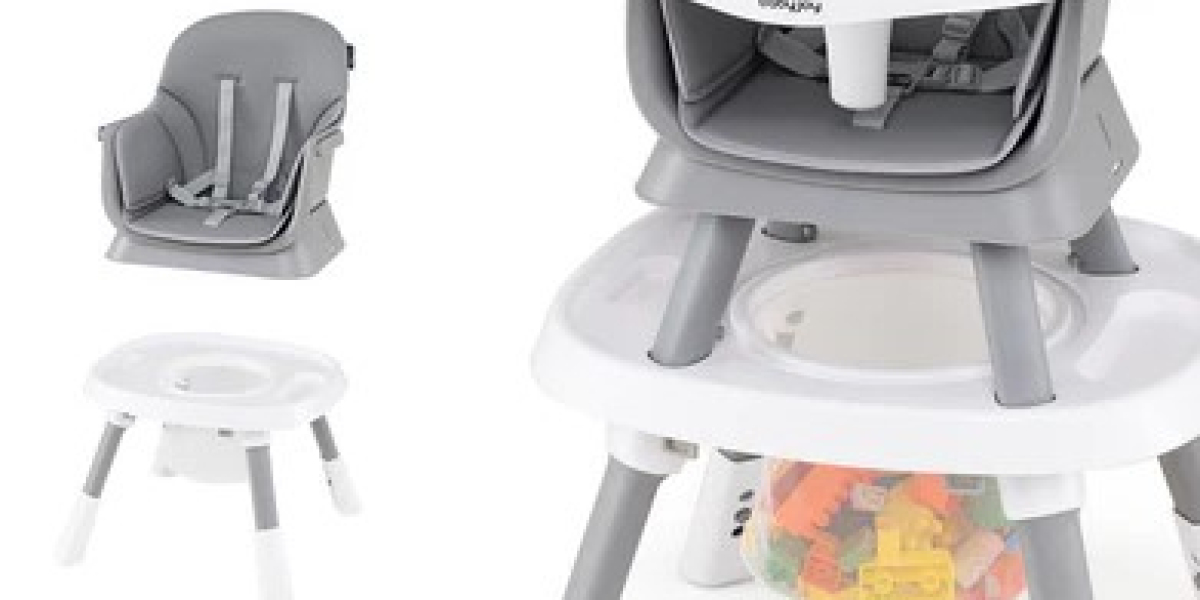
The CY01 convertible baby high chair offers several features that can support different private label requirements. Its dining-chair height is adjustable, and users can switch between high-chair and low-chair modes. The backrest is foldable, while a sliding mode provides another practical option for everyday use.
The serving plate has three adjustment positions, giving brands another useful feature to highlight when presenting the product to customers. A waterproof PU leather case can also make routine cleaning more convenient, which is an important consideration for products used during daily meals.
Rather than relying on one fixed specification, this type of configuration gives buyers more freedom when planning products for different retail levels.
Building Different Versions With Accessories
One interesting part of the CY01 design is its accessory configuration. Available options include a PU leather case, safety belt, wheels, steel tube, footboard, serving tray, lower plate, and decals. The factory lists basic, upgraded, deluxe, flagship, and exclusive configurations.
This provides a useful foundation for private label product planning. A distributor may want a straightforward configuration for price-sensitive markets, while another brand may prefer a more complete version for specialty stores.
Accessories can also help create differences between product listings without requiring a completely new chair design. This makes it easier for brands to organize product ranges around different customer expectations.
Practical Structure For Daily Use
A feeding chair needs to work as part of a busy household rather than simply look attractive in a product catalog. The CY01 uses 304 stainless steel pipe and a pyramid-style structure designed for stability. Its foldable backrest and easy-storage function also make it suitable for homes where space needs to be managed carefully.
The listed product size is 63 × 66 × 90 cm, with a net weight of approximately 2.91 kg. These specifications give buyers useful information when considering storage, packaging, shipping, and retail presentation.
For a private label program, practical details like these can be just as important as visual customization because they influence the complete product experience.
Supporting Long-Term Brand Growth
A private label project usually involves more than selecting a chair. Brands may need sample development, configuration discussions, production coordination, quality management, and repeat-order support. The company states that it integrates R&D, production, and sales, with a five-person R&D team and 15 high-precision injection molding machines. It also reports ISO 9001, EN14988, and ASTM F963 certifications, annual production capacity of two million pieces, and ODM/OEM services covering color, function, and IP collaboration.
These capabilities can give buyers more flexibility when developing feeding chairs for different markets. For companies planning to build a long-term baby product range, choosing a supplier that can support both product configuration and production requirements can simplify future expansion.
A well-developed private label feeding chair should combine practical functions with a clear product identity. By considering structure, accessories, usability, packaging needs, and market positioning together, brands can create a feeding product that fits their own sales strategy. To explore more baby chair manufacturing options and customization possibilities, visit https://www.kidstablefactory.com .